NYT Crossword Constructor Biographies
Every constructor on XWord Info has an Author Page which now also displays a biography if we have one.
Here's our list so far. Click a name or photo to see the Author Page.
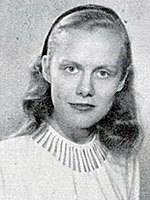
Virginia Peterson Abelson, a bookstore owner, had 11 crosswords in the Times, all in the Maleska era. ... read more
In his 1984 book "Across and Down," Maleska placed Abelson in his list of the most promising newcomers.
Born in Red Oak, Iowa, she graduated from the University of Iowa in 1948 with a degree in English.
In the 1960s, she owned a bookstore called Books Unltd. in Croton-on-Hudson, New York. Previously, she worked in advertising for Cambridge University Press.
For several years, she was a Democratic Party district leader in Croton.
Her husband, Alan Abelson, was a longtime columnist for Barron's and its editor for a decade. He passed away in 2013. Their daughter, Reed, is a journalist with the Times, and their son, Justin, is the editorial page editor of the Greenfield Recorder in western Massachusetts.
Virginia passed away in 1999 at the age of 72.
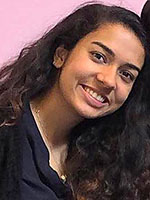
Alina Abidi grew up in California, and currently lives in Pittsburgh, where she works as a software engineer at Duolingo. She enjoys making pasta, climbing (easy, indoor) rocks, practicing the same one song on guitar ("Operator" by Jim Croce) and wearing socks with sandals.
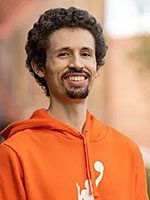
Erik Agard, of Kansas City, Mo., is a senior puzzle editor for the Andrews McMeel media company.
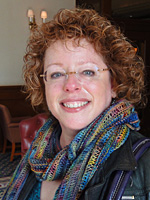
Deb does not fully understand how she got here, but she is the lead columnist and senior editor of the Gameplay section of The New York Times. Her parents are constantly calling to ask when she will get a "real" job. ... read more
She currently lives in N.J. (don't judge) but was raised in New York City, which may explain the attitude. Deb is also the author of the humor book, It's Not PMS, It's You.
The Pre-Shortzian Puzzle Project has a reminiscence of Jules Arensberg's crossword life from his daughter.
Alvin Ashby, creator of one the first known word lists, was a leading contributor to the Times in its inaugural year of 1942. Already a prolific constructor, Mr. Ashby had four puzzles in the Times in 1942, second only to Charles Erlenkotter, another veteran constructor. ... read more
By the early 1940s, Mr. Ashby had reportedly been published over 300 times in various newspapers and magazines. His first crossword appeared in 1924 in the Salt Lake Tribune. He had over 125 puzzles in the New York Herald Tribune alone. One profile noted that his 300 puzzles had earned him "over $1,500 for his trouble."
Mr. Ashby's success as a constructor was no doubt helped by an exhaustive word list that he created over several years. His word list contained about 200,000 entries, organized by word length. A 1943 article described how he created it:
[He] first bought a huge Webster unabridged dictionary. Then he proceeded to list, alphabetically, every word, suffix or prefix that was only two letters. His next alphabetical listing was compiled of all words three letters in length. Other separate lists were made of words containing four, five, six and on up to ten letters. Then our friend, with what strength he had left, labeled each of the 200,000 words as to whether it is a verb, noun, adverb, preposition, or horse of another color.
Another reporter described Mr. Ashby's word list, or "key book," as follows:
His guide to constructing puzzles is a key book…. Drafting of this book alone represents many years of work, it was pointed out. Every word in the English language is represented, except the obsolete ones.
That same reporter described Mr. Ashby and his workshop:
He … spends winters and spare time constructing the attractive but aggravating crossword puzzle. An inspection of Mr. Ashby's laboratory would dispel any belief that the real sufferer is the [one] who solves the puzzle. The room is piled ceiling high with key books, dictionaries, maps, fairy stories, mathematics books and headache powders.
On his growth as a constructor, Mr. Ashby said, "The whole thing in becoming a maker of crossword puzzles is developing yourself. Where it used to take me three months to invent one worthy enough to be accepted by a publication, I can run through a puzzle now in eight hours."
Alvin Jordan Ashby was born in Taylorsville, Utah in 1901. His father was a farmer and his mother was a homemaker.
Like his father, Mr. Ashby worked as a farmer. For several years he grew potatoes, carrots, and other vegetables in Bountiful, Utah.
In 1948, he married Edna Aamodt, a bookkeeper. The two traveled extensively by car throughout the United States, including once logging 8,000 miles through 20 states on one trip.
Besides constructing, Mr. Ashby was skilled in math. He devised several math problems and brainteasers for his local newspaper.
He passed away in 1979 at the age of 78.
Nancy W. Atkinson had 16 known crosswords in the Times, with at least one in each of the 1950s, 60s, 70s, 80s and 90s. ... read more
Besides the Times, she was published by the Washington Post, the Register and Tribune Syndicate, and other outlets.
For the Bicentennial in 1976, she co-constructed a massive crossword in the shape of the Liberty Bell. Published in syndication across the country, the puzzle had 677 clues. Its answers included all of the U.S. Presidents, the 50 states, and a host of American history entries. She collaborated on it with David Appel, features editor of the Philadelphia Inquirer.
Nancy Ellen Whittier was born in Maine in 1923. Her father was an executive at the advertising firm Young & Rubicam. Her mother was a homemaker. She graduated from Cornell in 1945 with a degree in English literature.
At Cornell, she met Ralph Atkinson, an engineering student. Nancy and Ralph married in 1945. In 1946, following Ralph's service as a Seabee in the Navy, the couple moved to Fort Kent, Maine, one of the state's northernmost towns. There they taught high school and were featured in a Liberty magazine article about teachers in rural areas.
In 1952, they settled in the Boston suburb of Winchester, Massachusetts, where they raised three children. All the while, Nancy maintained her family's ties to Maine, spending summers in Boothbay Harbor. In 1990, she and Ralph retired to Falmouth Foreside, Maine, near Portland. In addition to crosswords, she was an avid bridge player.
She passed away in 2021 at the age of 97.
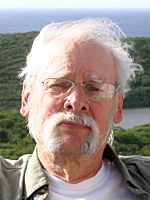
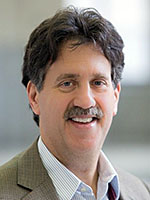
Autobiography from Jane Stewart and David Balton: ... read more
We started making acrostics long ago, by hand. On our first wedding anniversary, many moons ago, we each surprised the other with the gift of a homemade acrostic. A puzzle partnership foreshadowed!
About 15 years ago, Dave began a tradition of constructing acrostics for our family’s amusement on Christmas Eve, tailored to the interests and aptitudes of family members. Dave and Jane have created acrostics for friends and family more generally. Dave also submitted a crossword or two to the NYT over the years — including one constructed partly while on a work trip to the South Pole — but without success.
Needless to say, we were devoted fans of Emily Cox and Henry Rathvon ("HEX") throughout their storied run with the NYT. When we learned that the HEX era at the NYT was ending, we composed three acrostics and sent them to Will Shortz, having no idea what to expect. He ultimately decided to publish one of them on June 18, 2023, the puzzle based on the hilarious quote from Bill Bryson about parking in Rome. Will encouraged us to send him more … and before long, to our great joy, we found ourselves the NYT’s regular acrostic constructors.
The day our first acrostic ran in the NYT turned out to be special in several ways. On the Sunday morning in question, we bought a hard copy of the NYT and showed our names in print to visiting friends, to their considerable amazement. We also told them a story from more than 40 years earlier. In the early 1980s, the dad of one of Dave’s college friends had published a crossword in the NYT. That dad told Dave of the morning when he rode a commuter train into New York City and watched with glee as seemingly everyone in the train car was solving his puzzle. Dave thought then, "Some day "...
On the June day when our first NYT puzzle appeared, we went to a Washington Nationals baseball game with a large gathering, where our friends passed out copies of the puzzle that they had procured for all to do between innings. Dave’s "commuter train" moment had arrived! Similarly, Jane has been tickled to see some of her symphony colleagues huddled around acrostics backstage at the Kennedy Center.
Our approach to constructing acrostics starts with finding pithy quotes that meet all the format requirements — no mean feat. We try to vary the quotes by topic and author profile, sometimes with a view to a particular upcoming holiday or anniversary. We offer the possible quotes to Will first to get his blessing. Next, Dave creates an initial word list (answers), which is rather like playing a large and highly structured game of Bananagrams. We like to incorporate many answers and clues that link to the theme(s) of the quote.
Next, Jane generates clues for each answer, oddly finding her best inspiration while in the shower or behind the wheel, neither situation ideal for jotting down ideas. Sometimes, the clue-writing phase leads us to revisit our initial word list. After some back-and-forth, we send a beta version of the puzzle to our daughter, Becca; she solves the puzzle and offers valuable feedback. When we have incorporated Becca’s suggestions, we ship the acrostic off to the puzzlemeisters of the NYT, who edit some clues and run the puzzle by their own beta testers.
We are delighted to be undertaking this joint venture. Although we both love solving puzzles and playing word games (especially Upwords), we have careers that immerse us in very different pursuits. Jane is a first violinist with the National Symphony Orchestra and does some copyediting. Dave, who spent most of his career as a lawyer and diplomat for the U.S. State Department, worked in the White House until January 2025. He now has affiliations with the Harvard Kennedy School and the Ocean Conservancy.
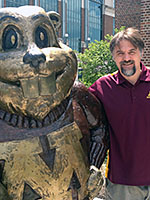
Victor Barocas is a professor of biomedical engineering at the University of Minnesota. He's a longtime member of the National Puzzlers' League and contributes puzzles to its monthly publication, The Enigma.
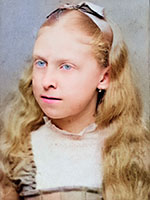
Agnes W. Bartlett, a fundraiser for healthcare in Appalachia, was one of the first female constructors in the Times. She was likely the third woman and 16th overall constructor to appear in the Times. (Uncertainties due to pseudonyms require caveating these types of rankings.) ... read more
Ms. Bartlett's debut in the Times was published in September 1942. It is her only known Times crossword. Among female constructors, only Mabel Daggett and Alma Tally appear to have preceded her. The byline "Marie C. French" also came before Ms. Bartlett, but that is likely a pseudonym of Ms. Daggett.
In 1888, a puzzle by Ms. Bartlett appeared in Harper's Young People magazine. It was a so-called "enigma" puzzle, a type of puzzle that described a mystery word, often in verse. Young Ms. Bartlett's enigma is the earliest-known puzzle of any kind to be published by a Times crossword constructor.
Born in 1875, she ranks among the earliest-born Times constructors, a group that also includes Alexis Boodberg (1869), J.C. Doesburg (1869), Harriot Cook (1871), Ms. Daggett (1873), Lester Keene (1874), Thomas Meekin (1878), Louis Shields (1881), and Charles Erlenkotter (1881).
This generation was already in their 30s and 40s when crosswords were invented in 1913 (Ms. Bartlett was 37). When the Times launched its crossword in 1942, they were in their 60s and 70s, with Ms. Bartlett being 66.
When Ms. Bartlett made her Times debut, she was already an established crossword constructor. Her puzzles appeared in the New York Herald Tribune in the early 1930s and in a 1933 book called "The Crossword Tracer," which celebrated her as "well known to all puzzle fans."
Agnes Willard Bartlett was born in 1875 in Brooklyn, New York. Her father, Willard Bartlett, was a prominent lawyer who served as the Chief Judge of the New York Court of Appeals, the state's highest court. He had once been a literary and drama critic for the New York Sun. Agnes's mother, Mary (Buffum) Bartlett, was a homemaker. The family was part of New York's elite upper class. Mr. Bartlett was a one-time law partner and lifelong friend of Elihu Root, a U.S. Senator and Secretary of State.
Agnes showed an early interest in creating puzzles. Her 1888 enigma puzzle in Harper's Young People was published around her 13th birthday:
The solution to her puzzle is FRINGED GENTIAN, a 14-letter wild flower.
Ms. Bartlett was an active fundraiser for healthcare services in Appalachia. In about 1913, she learned of the work of Lydia Holman, a nurse who served communities in the mountains of North Carolina. Nurse Holman focused on bringing medical and social services into the homes of poor and isolated families, often traveling by horse to do so. Inspired, Ms. Bartlett launched an effort to raise funds annually to support Ms. Holman's work. The program was credited with reducing maternity mortality rates in the area. As one publication explained in 1922:
The financial support … originated chiefly through the activities of Miss Agnes W. Bartlett, a Brooklyn woman. Through her enterprise two groups were organized, one in Brooklyn … and one in Boston; and the two groups combined raise about $5,000 per year, which includes the salary of a physician.
Ms. Bartlett traveled to North Carolina to see first-hand Ms. Holman's work and the communities it served. She also raised money to provide holiday gifts to children in Appalachia.
She had a role in preserving an element of medical history. Her great-uncle was Dr. Elisha Bartlett, a leading medical authority in the 19th century who was credited with helping shift American medicine to a more scientific approach. Ms. Bartlett possessed papers related to Dr. Bartlett and was active in having them archived.
She passed away in 1953 at age 78.
From Paula Bauersmith's Wikipedia Page: ... read more
Bauersmith first appeared on the stage in 1929 while attending the Carnegie Institute of Technology. She made her New York City theatre debut in October 1931 playing Carmen Bracegirdle in the original Broadway theatre production of Lean Harvest at what was then referred to as the Forrest Theatre.
During her theatrical career, which spanned more than three decades, she appeared in several other original Broadway productions, such as Three-Cornered Moon in 1933, Bury the Dead (1936), Sail Away (1961), and Breakfast at Tiffany's (1966). She also appeared on various theatrical television programs, such as The United States Steel Hour (1954), Producers' Showcase (1955) and a television production of The Crucible (1967).
Ralph G. Beaman constructed the first-ever Schrödinger crossword in the Times, which appeared on February 7, 1988. Beaman's puzzle is the only Schrödinger in the Pre-Shortz Era. It was published over 8 years before David Kahn's first-of-the-Shortz-Era Schrödinger and Jeremiah Farrell's Dole/Clinton masterpiece, both of which appeared in 1996. ... read more
In the Pre-Shortzian Puzzle Project blog, David Steinberg discussed Beaman's puzzle at length, noting such unique features as its inclusion of three 21-letter spans employing the Schrödinger device and the use of Schrödinger elements in the clues.
Ralph Gardner Beaman was born in Plymouth, Massachusetts in 1923. His father was a funeral director, and his mother was a homemaker. He graduated from Dartmouth College in 1944. He then served in the Navy at its foreign language school. He earned a Ph.D. in chemistry from the University of Illinois in the late 1940s. By the 1950s, he joined DuPont in Wilmington, Delaware, where he would spend the rest of his career as a chemist.
He had a profound interest in words and their patterns. Throughout the 1970s, he wrote articles for the journal Word Ways. (This journal was later edited by fellow Schrödinger constructor Jeremiah Farrell).
In one of his Word Ways articles, Beaman analyzed the interplay between a word's length and its number of syllables, identifying words that have the same number of syllables as letters, including a four-letter word with four syllables (IEIE, a Hawaiian pine).
In another Word Ways article, he attempted to show the maximum possible score in Scrabble, demonstrating a game in which the total score is 4,153 (featuring two board-spanning words: JACKPUDDINGHOOD and BENZOXYCAMPHORS).
In other articles, he identified words that form new words if the last letter is dropped (e.g., RABBIT to RABBI), the first letter is dropped, both the first and last letters are dropped, and other more complex sequences. Notably, his various Word Ways analyses do not reference the use of a computer and instead suggest he formulated them by hand.
He passed away in 1997 at age 73.
Sam Bellotto, Jr. is the editor and publisher of Perihelion, an online science fiction magazine that originated as a print publication in 1967.
Evelyn Benshoof had at least 71 puzzles in the Times. Her crosswords first appeared in the late 1960s and continued until the early 90s, with puzzles in each of the Farrar, Weng, and Maleska Eras. ... read more
In 1972, the Seattle Times featured her in an article about crosswords, noting:
She began constructing to keep her husband occupied during an illness. He ran out of puzzles and she said, "Let's make up some of our own."
Eventually, she submitted some to the New York Times. They were promptly rejected.
"They weren't good enough," Mrs. Benshoof said. "So I tried to improve the quality. I've sent in lots of them. A few have been published. But there are crossword puzzle makers all over the United States doing the same thing. The competition is very keen."…
"You have to be versatile," she said. "At first, I was very bullheaded. I wouldn't change anything until I got myself into a corner I couldn't get out of. Now I'm willing to admit it when I'm in a tight spot and I'll change the puzzle around to make it work."
She told the Seattle Times that she rarely solved crosswords herself. "As for my husband, he doesn't much care for my puzzles. They're too hard."
Evelyn Frances Edlund was born in St. Paul, Minnesota in 1909. Her father was a railroad switchman, and her mother was a homemaker. The family moved from Minnesota to Spokane, Washington, when she was a young girl.
In 1930, she married Everett Benshoof, who worked in meat packing in Spokane. She and Everett had one daughter, Ilene. By 1950, they moved from Spokane to Seattle.
For over 20 years, Evelyn worked as a telegraph operator, first for Western Union and later for the North Pacific Railway.
She retired in about 1970. During her retirement, she constructed most of her puzzles for the Times, the last coming in 1992 when she was 81.
She passed away in 1997 at the age of 87.
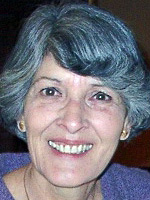
Sherry Blackard was a highly-respected constructor, known for her tough themeless crosswords. Her obituary.
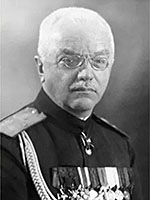
When crosswords were invented in 1913, Alexis P. Boodberg seemed an unlikely candidate to construct them someday. At the time, he was a 43-year old officer in the Russian Imperial Army, stationed in Vladivostok in East Asia. It was the eve of World War I and he was soon deployed to Europe as a commander on the Eastern Front. Then, in the wake of the Russian Revolution in 1917, he served as the Minister of Defense in an ill-fated White Army campaign against the Bolsheviks. Facing defeat, and the risk of imprisonment or execution, he fled his homeland. In 1921, he emigrated to the United States, where he lived until passing away in 1945. ... read more
Throughout his life in exile, he wrote extensively about his wartime experiences and international affairs. He also pursued the less weighty subject of puzzles. In the 1930s, he noted the "peaceful contentment" of solving a word scramble game, in contrast to his prior life of "deciphering [the] enemy's plans and stratagems on the battlefields of several wars."
His interest in puzzles led to constructing. In 1942, the inaugural year of the Times crossword, he had two puzzles published. In all, he had four in the Times.
His ties to Russia were evident in his crossword entries, which included VLADIVOSTOK (Russian naval seaport), SPASSK (Great airfield 125 miles north of Vladivostok), ROSTOV ("The oil spigot of Russia"), MURMANSK (Great arctic convoy port), TSARITSYN (Stalingrad, 25 years ago), TSARINA (Queen ___), MOSCOW (Former capital of Russian czars), and many others.
He ranks highly in several Times crossword "all-time" categories. He was the earliest-born constructor, born six months before J.C. Doesburg, the only other Times constructor born before 1870 (according to current data). He was also one of the first foreign-born Times constructors to be published and one of the first whose native language was not English. His first Times puzzle appeared when he was 73, placing him among the oldest to debut.
Baron Aleksei Pavlovich von Budberg was born in 1869 into an aristocratic family long loyal to the Russian monarchy. (In the U.S., he referred to himself as Alexis P. Boodberg). As a youth, he attended an elite military school in his hometown of Oryol, Russia. He then served in premier armed forces units before entering the Russian Academy of the General Staff, a school in St. Petersburg for training young officers for top positions in the Tsar's military.
Upon graduating in 1895, he was stationed in the empire's East Asian region. According to one account, Tsar Nicholas II congratulated the young officer on finishing at the top of his class and suggested he stay in St. Petersburg at the central command. But Boodberg replied that his hope was to be deployed in the tumultuous eastern territories. His request was granted and he spent nearly 20 years in East Asia, where he was active in the Russo-Japanese War and the Boxer Rebellion. His duties also included overseeing the massive fortresses around Vladivostok, the empire's most strategic city on the Pacific and the eastern point of the Trans-Siberian Railroad.
When World War I broke out, he returned to Europe, where he served as a lieutenant-general in Russia's assault on the Eastern Front. One of his obituaries credited this Russian campaign with saving Paris, presumably by consuming German forces that otherwise may have broken through on the Western Front.
During the Russian Civil War in the late teens, he sided with the White Army against the Bolsheviks. He returned east to Siberia and served as the Minister of War under the White leader Alexander Kolchak. As the Whites were collapsing, and not long before Kolchak was executed, Baron Boodberg fled the country. He first went to Manchuria and then Japan. From there, in 1921, he emigrated with his wife and two of his children to the United States. He was separated from his two other children, both young adults, but they were able to reach the U.S. later in 1921.
In exile, the family initially settled in Menlo Park, California, where Baron Boodberg operated a Russian tea room. In 1925, they moved to San Francisco, where the family opened another tea room.
Fluent in English, Baron Boodberg lectured and wrote extensively on world affairs, including a 1921 piece entitled "What Would Happen if Japan Attacked America" in a New York Times monthly.
Throughout his exile, he was openly critical of the Soviet government and lamented the loss of the Russia he knew. In 1938, he was a featured speaker at a tribute to the Russian monarchy on the 20th anniversary of the execution of Tsar Nicholas II and his family.
In 1939, he won a $2,000 prize in a San Francisco Chronicle word game contest. The game, called "Scramagems," was similar to Scrabble. He tied for first, and was declared the winner based on his essay about his interest in the game:
After many years spent in puzzling over fate's cryptograms on the battlefield of life, and in deciphering [the] enemy's plans and stratagems on the battlefields of several wars, I found peaceful contentment in the harmless pursuit of solving The Chronicle's "Scramagems."
First, with small arms — my pencil and paper — I engage the enemy at his weakest point.
Then, the heavy dictionary ordinance is brought into play and the battle rages all along the "Scram Line."
Victory at last! One by one the prisoners are trotted off to the answer blank. A great scrap, this bloodless War of Scrams!
Baron Boodberg's wife, Valentina, died in 1933. Of their four children, two sons became professors at U.C.-Berkeley, one in engineering and the other in Asian studies, a discipline the son was credited with pioneering at the university. Their daughter operated the family tea room and another son was an engineer.
Baron Boodberg passed away in 1945, a few months after the Allies, including his homeland under Soviet rule, prevailed in World War II. He was 76.
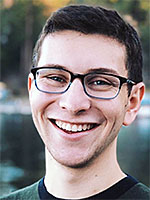
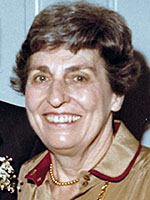
Jeanette Brill's son Jon (who is also a constructor) relayed an interesting anecdote: when Jeanette was constructing, she had paper cut-outs of individual letters that she would move around her grid as she changed her fill. Sounds a bit akin to using Scrabble tiles. ... read more
Jeanette was born Jeanette Kessler in 1917. She grew up in Bethlehem, Pennsylvania, and graduated from the University of Pennsylvania College for Women. She also earned a master's degree in psychology from UPenn in 1938 while working as a social worker at the Pennsylvania State Hospital.

Sam Brody, of Brooklyn, is a research scientist and software engineer specializing in Natural Language Processing.
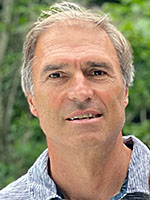

Sam Buchbinder is a Chicago born constructor, who has lived and taught High School history in the New York City public schools since 2008. As part of his teaching role, he programs all the classes each year for 550 students, which makes constructing crosswords look easy. He currently resides in the Bronx, with his wife and two young daughters.
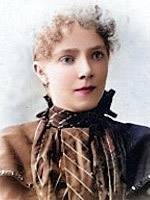
The photo is of Mr. Bywaters's great-grandmother, Maria Thusnelda Steichmann Kuraner, who he called a crossword connoisseur.
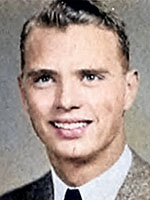
William L. Canine was born in 1922 in Kansas City, Missouri. He graduated from Duke University. In World War II, he was an officer in the Marines, serving in the Pacific as a platoon leader. He was wounded at Iwo Jima and awarded the Purple Heart. In 1946, he married Emily Anderson. They had four children. ... read more
After the war, he taught English at Duke. He later became the director of development at Hollins College in Virginia and Newberry College in South Carolina. He also worked in development for the Nature Conservancy.
He passed away in 2007 at age 84.
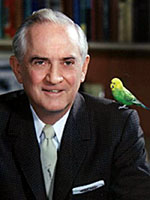
Anthony B. Canning, an oil company executive, had at least 26 puzzles in the Times. In 1974, he was one of about 60 constructors to attend a luncheon honoring Margaret Farrar for her 50 years as an editor. As Eugene Maleska recounted in his book Across and Down, "the most appreciated constructor of them all was A.B. Canning, our Texas tycoon. He picked up the tab for the drinks." ... read more
Canning's first known puzzle in the Times appeared in 1974. Especially given his attendance at the Farrar tribute, he may have had earlier Times puzzles in the unknown author category.
Anthony Basil Canning was born in Cleveland, Ohio, in 1901. His father was an executive in the iron and steel industry. His mother was a homemaker.
In the early 1930s, he married Barbara Rehberg, a music teacher from Ohio. In 1935, they moved to Fort Worth, Texas, where Anthony joined an oil products company specializing in lubricants and waterproofing materials. He rose to become the company's president with his expertise in sales practices.
In 1963, Barbara passed away. Anthony later married Frances Marshall, whom he had met at the company.
He retired in 1966. In retirement, in addition to constructing crosswords, he authored a book on sales. He was also an avid golfer and thoroughbred racing enthusiast.
He passed away in 1983 at the age of 81.
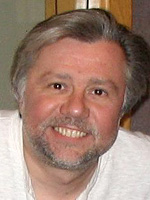
Gary Cee is the General Manager and morning host at radio station Pocono 96.7 in Stroudsburg, PA. He grew up in Patchogue, NY and graduated from NYU. ... read more
Gary is a former Senior VP of Programming for iHeartMedia, a former Managing Editor of Circus Magazine, and the author of ‘Classic Rock.' There is a symphony playing in his head that one day will be committed to a proper score.
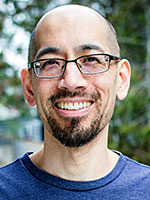
Jeff Chen is a writer and professional crossword constructor living in Seattle. From 2013 to 2023, he wrote commentary on each daily puzzle for the XWord Info website. His latest book, Spy School: Entrance Exam, spent many weeks on the Indie Bestseller list in 2024/2025. ... read more
Jeff also invented the new word games Squeezy and Pair Down, and is tinkering with other daily games. He can be reached at www.JeffChenWrites.com.

Kevin Christian lives in Burlingame, CA. He does pricing strategy for a tech firm in Silicon Valley. He likes to ride his bike, walk his dogs, and walk up and down the bleachers at the local high school. He enjoys listening to heavy metal bands like King's X and watching horror movies like "Let the Right One In." ... read more
He recorded the song "All the Children Sing" for the CD "A Tribute to Todd Rundgren Part II, Still There's More," which was released in 1995. His wife Helen, son Tim, and daughter Kate find his crossword obsession mildly amusing.
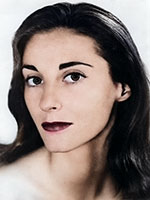
From Wikipedia: Tanaquil Le Clercq (/lɛkˈlɛər/ lek-LAIR; October 2, 1929 — December 31, 2000) was an American ballet dancer, born in Paris, France, who became a principal dancer with the New York City Ballet at the age of nineteen. ... read more
Her dancing career ended abruptly when she was stricken with polio in Copenhagen during the company's European tour in 1956. Eventually regaining most of the use of her arms and torso, she remained paralyzed from the waist down for the rest of her life.
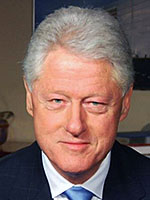
Bill Clinton was the 42nd president of the United States. He was featured in the film Wordplay.
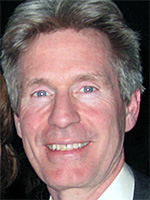
Pete Collins recently retired from teaching mathematics for over 40 years in the Ann Arbor Public Schools. He continues to teach part-time at the University of Michigan. His first crossword publication was in 2005, and since then he's had over 200 more. In addition to the NY Times, those include puzzles in the LA Times, WS Journal, Fireball, New York Sun, USA Today, and Universal. ... read more
He's proud to have debuted the following entries in the NY Times: BOB MARLEY, PURPLE HAZE, and TWERK.
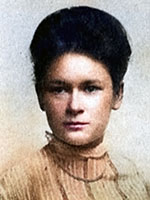
Alice H. Cook had 26 known Times crosswords in the 1940s and 50s. She likely had more, since many Times crosswords from her era are by unknown constructors. Her 21 Sunday puzzles place her among the top 60 Sunday constructors all-time. Among woman, she ranks 11th in that category.* ... read more
A physician, she taught medicine in China for over four years in the 1920s. There she married a fellow doctor before returning to the U.S. The couple settled in New Haven, Connecticut, where they each worked at Yale University in various capacities.
Alice Harriet Cook was born in Wyalusing, Pennsylvania in 1886. Her father was a pastor and her mother was a homemaker. Her family's roots were in missionary work. Both her father and grandfather were Presbyterian ministers at a time when missions were a central focus of the church. To that end, her parents moved to the frontier in Montana Territory from 1877 to 1882, a few years before Alice was born. There her father led a church in Missoula. One of her brothers became a minister and spent years in Asia as a missionary.
Alice attended Mount Holyoke College, where her work in China was foretold in a yearbook description of her: "So industrious is she, so fond of truth and verity, that she shall sail across the sea, to teach … charity."
After graduating from Mount Holyoke in 1908, she enrolled at the Woman's Medical College of Pennsylvania, where she obtained an M.D. in 1913. In 1920, she traveled to China to teach at the Peking Union Medical College, a school dedicated to promoting western medical education in China.
In China, she married Otto Willner, a fellow physician at the school. Alice's brother, the minister, officiated the ceremony. Otto was born in Bohemia and joined the school after World War I. As a subject of the Austro-Hungarian Empire, he had been captured by the Russian Army in 1914 and spent the war in Siberia attending to fellow prisoners.
In China, the couple collaborated on research and were credited in a medical journal for their work on the impact of the drug ephedrine on nasal passages. They had their first child, a daughter, in China.
In 1924, they moved to the U.S., eventually settling in New Haven. In the U.S., they had two more children, a daughter and son. Alice worked as a physician at the Yale Department of Public Health. She passed away in 1973 at the age of 87.
*Rankings are best estimates based on available information. For Alice Cook, one of her crosswords appears to have been published under the pseudonym "Alice McKinley." In the 1940s, Dr. Cook lived on McKinley Avenue in New Haven. Margaret Farrar sometimes published crosswords using pseudonyms to avoid having the same constructor's name appear within a few weeks of each other. She often used street and city names in place of the constructor's real names. In this case, the crossword by Alice McKinley appeared two weeks after a crossword was published under Alice Cook's real name.
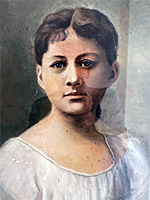
Harriot Cooke was one of the first female constructors published in the Times. Her first Times crossword appeared on December 20, 1942. She was a veteran constructor by then, having been published in other outlets as early as 1928. She had ten puzzles total in the Times, with her last appearing in 1946, the same year she died. ... read more
Harriot Stoddert Turner was born in Spring Hill, Tennessee, in 1871. Her great-grandfather, Benjamin Stoddert, was the first Secretary of the Navy, appointed by John Adams in 1798.
Her family moved to Missouri when she was a child. She graduated from the Mary Institute, a school for girls in St. Louis. In 1893, she married Hedley V. Cooke, an attorney. They briefly lived in Denver before moving to New Jersey, where they raised three children.
Harriot was active in politics. In the 1920s, she was president of the New Jersey League of Women's Voters. She worked to mobilize women voters to support the 1928 Presidential campaign of Al Smith.
She was also a writer. Her works included book reviews, essays, and poems in publications like The New Republic and the New York Herald. She also wrote a series of primers on local, state, and national politics.
In the 1930s, she and Hedley moved to Washington, DC. She died there in 1946 at the age of 75.
Note: having been born in 1871, she's one of the earliest-born constructors in the Times. She's 27 years older than Farrar and about 45 years older than Maleska.
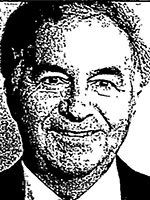
Roger H. Courtney, a longtime radio announcer, had 13 crosswords in the Times between 1986 and 1995. He had a puzzle on every day of the week except Sunday. ... read more
He was also published by Simon & Schuster, the Los Angeles Times, and other outlets.
"It's fascinating and creative and exacting," he said in a 1990 interview. "I spend a lot of time with words, and I enjoy coming up with interesting themes and doing all the research. I used to do bowling. Now I'm addicted to crosswords."
His radio broadcasting career began in Bradenton, Florida, in the 1960s.
"I did everything at the station back then," he said. "I was news editor and production man. I covered meetings and helped broadcast the Pittsburgh Pirates spring training games. Everything was new to me, and I was eager to learn."
He went on to work as an announcer and news editor at stations in Tampa, St. Petersburg, and his hometown of St. Louis, Missouri. In the 1970s, he hosted a daily talk show at WFLA in Tampa called "Ask the Expert."
Roger Harry Courtney was born in 1934 in Missouri, the son of Daniel Courtney, a radio operator for the Army Corps. of Engineers, and Mildred (Yost) Courtney, a homemaker.
He passed away in 2018 at the age of 84.
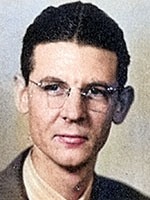
Hume R. Craft was first published in a major outlet as a high school student in the 1920s. "The first attempt of a youthful constructor appears to be highly successful," the crossword editors wrote of a 1928 puzzle he authored. ... read more
His first known crossword in the Times appeared in 1957. He had at least 35 puzzles in the Times, spanning the Farrar, Weng, and Maleska eras. His 33 Sunday crosswords place him among the most prolific Sunday constructors.
Besides crosswords, he also constructed cryptics. Maleska, in the book Across and Down, cited him as a cryptics expert.
Hume Richter Craft was born in 1912 in Watertown, New York, near Lake Ontario. His father was a physician who took part in Robert Peary's expedition to the North Pole in 1908. His mother was a homemaker.
When he was a young boy, the family moved from New York to South Carolina, his father's home state. It was in South Carolina that he took up constructing as a high school student amid the crossword craze of the 1920s.
He attended Lenoir Rhyne College in North Carolina, graduating in 1933 with a degree in English and French. He later studied industrial engineering at the University of North Carolina at Chapel Hill. In 1935, he married Mary Sherrill, who also attended Lenoir Rhyne. They had three children.
In 1945, after teaching high school for several years, he joined the Oak Ridge National Laboratory in Tennessee. He worked at Oak Ridge for 30 years, specializing in the study of radiation's impact on health. He retired in 1975.
He passed away on September 14, 1981. Two weeks later, just before what would've been his 69th birthday, the Times published its last puzzle by him.
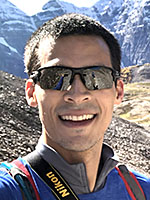
Kevin Curry is a stay-at-home dad and part-time consultant on corporate carbon emissions. He lives in Seattle with his wife, Zhou Zhang, and three kids, two of whom are also budding crossword constructors.
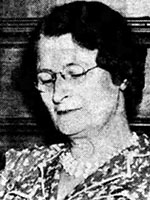
Mabel C. Daggett was the first woman published in the Times as a constructor. Her first puzzle in the Times appeared on March 8, 1942, only the fourth crossword published by the Times. She followed it up with another in June of that year. At this time, she was already an established constructor, having debuted in 1927 in the New York Herald Tribune and been published in several outlets thereafter, according to a feature article about her. ... read more
Mabel Cornelia Daggett was born in 1873 in Parishville, NY. Her family moved to Elmira, NY when she was a child. She graduated from Elmira College in 1896. She was a French teacher. She taught for several years at her high school alma mater in Elmira and then moved to Brooklyn, where she taught for over 20 years. She retired from teaching in 1938. She passed away in 1955 at age 81.
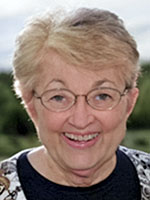
Jean Davison is the author of such books as Oswald's Game (1983), a portrait of Lee Harvey Oswald, and The Devil's Horseman (1976), a romantic suspense novel.
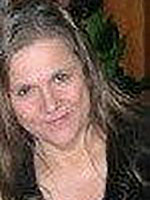
Gayle Dean's puzzles have appeared in The Washington Post, NY Times, Dell, Simon & Schuster, Crosswords for Dummies, Tribune Media, and many other major publications. She constructed puzzles for Eugene Maleska for many years and had 34 puzzles appear in the NY Times from 1985-2015. ... read more
Her E-Less puzzle (no E's in either the grid or the clues) from May 4, 1999, was chosen by Will Shortz for one of his books of 'Favorites'. He called it a "feat of construction". Gayle and Will tried to figure out a clever way to eliminate the e's from her byline as well but decided best to leave it alone.
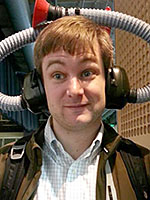
Joe Deeney, of Melrose, Mass., is a supply chain director for Philips, a health technology company based in Amsterdam.

Chandi Deitmer, of Cambridge, Mass., is an editor for Elevate Labs, a brain-training app. Her crosswords have appeared in The Los Angeles Times, USA Today, The New Yorker, The Atlantic, and numerous "indie" outlets.
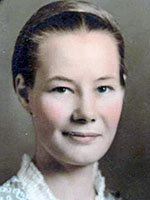
Martha (née Johnson) DeWitt was born in South Carolina in 1910. She was nurse. While studying nursing in Philadelphia, she met John DeWitt, a Navy officer. They married in 1935. With Capt. DeWitt serving in the Navy until 1958, the couple lived throughout the world, including in Hawaii in 1941 when Pearl Harbor was attacked. Martha attended to servicemen injured in the attack. They also lived in Guam, Japan, and Virginia. ... read more
In retirement, they moved to Idaho and California before settling in South Carolina in the 1980s. In addition to constructing crosswords, Martha enjoyed golf, which she played into her late 80s. She passed away in 2000 at the age of 89.

Joe DiPietro owns the bar "one-star" in the Chelsea neighborhood of Manhattan. Its website self-deprecatingly calls it "a dingy hole on a deadish street" (but it gets 4.5 stars on Yelp).
J. C. Doesburg constructed the eighth-ever crossword in the Times, which appeared on April 5, 1942. A native of the Netherlands, he was one of the first Times constructors — if not the first — born outside the United States. He was also one of the first Times constructors whose first language (Dutch) was not English. ... read more
He was 72 and a seasoned constructor when the Times started publishing crosswords. He is the only Times constructor known to be born before 1870. To put it in context, he was five years older than Margaret Farrar's mother.
John Constant Doesburg was born on November 22, 1869 in the Netherlands. When he was about 20, he emigrated to the United States. In 1891, he enlisted in the Marines Corps, where he was stationed on Mare Island in California and later aboard the U.S.S. San Francisco, including when it was the flagship of the Navy's North Atlantic Squadron.
By 1897, he had left the service and settled in Amsterdam, New York, located about 35 miles northwest of Albany. He married twice and had two children, a daughter and a son. Over the course of 40 years in Amsterdam, he worked as a shoe salesman, furniture merchant, streetcar conductor, and bookkeeper.
As a crossword constructor, he was published throughout the 1930s in the New York Herald Tribune syndicate, with puzzles appearing as early as 1932.
In the Times, he had a total of five crosswords. His last puzzle was published in September, 1943. Three months later, he passed away at the age of 74.
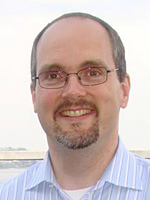

Collin Drown, of Richmond, Va., is a Ph.D. student in Educational Research, Assessment and Evaluation at Virginia Commonwealth University.
Alex Eaton-Salners is an in-house attorney for Sandisk, a technology company headquartered in Milpitas, California.
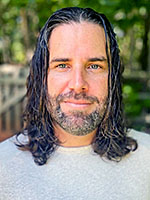
Lance is a pharmacist who moved to Mint Hill, NC, so his family could be closer to nature, hiking, and adventure. He helps his amazing wife homeschool his three kids. The older kids will be learning crossword solving/constructing, so hopefully, it will be a race to see which of us will appear next!
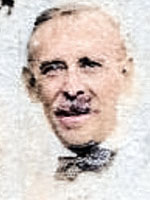
Charles Erlenkotter constructed the first-ever crossword in the Times, published on February 15, 1942. At that time, he was a veteran constructor, having been published in outlets as early as 1924 and frequently after that. ... read more
He was born in Hoboken, New Jersey, in 1881. He married Wilhelmina "Mina" Weinacht in 1911.
As a young man, he ran his family's printing business after his father, the proprietor, died in 1897. He later joined the Hamburg American Line, a German-owned shipping company, where he spent most of his career. He would go on to work in various locales for the company, including San Francisco, St. Louis, and Montreal. During World War I, the company's operations were limited, and Charles instead worked for the New York Conservation Commission as a forester.
After the war, he resumed work with the Hamburg American Line. He and Mina moved to Montreal, and he managed the company's office there.
By 1924 he had begun constructing crosswords. That year, he was published in the Tribune syndicate.
In 1939, the outbreak of World War II interrupted the Hamburg American Line's business again. Charles left the company and he and Mina moved back to New York, settling in the Bronx. There he focused on puzzles. In the 1940s, besides the Times, he was active with such publications as Stars and Stripes and the newspaper PM, which later became the New York Star. He was also an editor of Simon & Schuster puzzle books.
He passed away in 1948 at age 67.
In the forward to Eugene Maleska's book Across and Down, Margaret Farrar noted that Erlenkotter was also known as "Charles Cross." The third-ever puzzle in the Times, appearing on March 1, 1942, was published under the Charles Cross name and was likely by Erlenkotter.* Erlenkotter may have also been published under the pseudonym "C.E. Noel," the byline that appeared on Christmas Eve in 1944.
* Margaret Farrar likely employed the Charles Cross pseudonym for other constructors as well. It appears as late as 1962, several years after Erlenkotter's death. David Steinberg's Pre-Shortzian Puzzle Project blog noted that several books stated that Farrar used the Charles Cross moniker to avoid the same constructor's name appearing close in time.
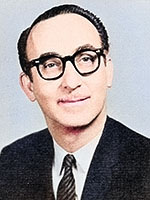
Herbert Ettenson's crossword career as a constructor/editor spanned 65 years. He was first published in the New York Herald Tribune in 1932 or 1933 at the age of 16. (He recounted the story of going to the offices of the Herald Tribune at that time and introducing himself to the puzzle editor, who replied "Oh, your father makes wonderful puzzles.") ... read more
He worked in his family's clothing business and later became an English teacher in the Bronx. In the mid-1970s, he was named the full-time crossword editor for Simon & Schuster, a post he held until his retirement in 1997.
In separate articles by Eugene Maleska and Will Shortz in the 1980s, Herbert Ettenson is mentioned by name as one of the major innovators of the early era.
The photo here is from the 1968 yearbook of Theodore Roosevelt High School, where he taught.
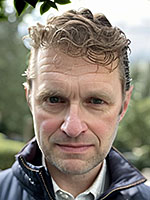
Trent H. Evans, originally from Fort Worth, Texas, is a clinical psychologist (trentevans.com) living in Catonsville, Maryland. He is also a semi-professional musician and runs the indie crossword site Grid Therapy.
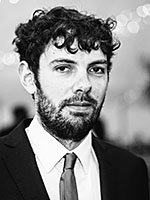
John Ewbank is a scientific writer based near Manchester in the UK. He got into writing cryptic crosswords whilst studying at the University of Warwick, and now regularly sets cryptics for The Times of London. John began dabbling in American crosswords during one of the many UK lockdowns, though he needed plenty of guidance from Jeff Chen to get the hang of it!
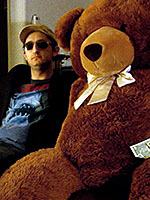
Alex Eylar is a writer from California, born of musicians, raised with a love of Lego, failed backwards into the movie business after college, and now assembles black-and-white grids for money while chasing the Hollywood dream.
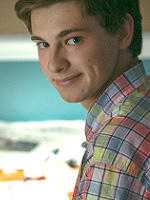
Sam Ezersky is the digital puzzles editor for The New York Times. Besides helping with the crossword, he oversees other daily Times games like Spelling Bee and Letter Boxed.
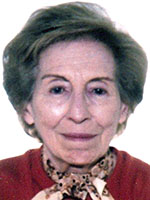
Grace Fabbroni started constructing crosswords after a chance meeting with Eugene Maleska who was the principal in the school where she taught. PSPP has a letter she wrote about her life in puzzles.
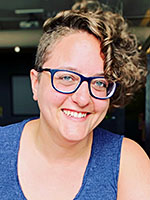
Rachel Fabi, of Syracuse, N.Y., is a bioethics professor at SUNY Upstate Medical University.
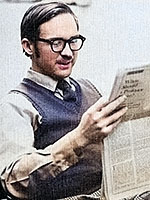
From Flip Koski: Jeremiah "Jerry" Farrell constructed the ingenious Dole/Clinton crossword that appeared in the Times on Election Day in 1996. The puzzle is widely considered the most famous crossword ever. A Schrödinger puzzle, its clue "Lead story in tomorrow's newspaper" can be answered either CLINTON ELECTED, or BOB DOLE ELECTED. In an interview with Slate, Will Shortz called it his favorite crossword of all time. ... read more
Although there is only one Times crossword attributed to Farrell in the XWord Info database, he may have others in the unknown constructor category. In an interview in the 1980s, he noted he had been published in the Times on several occasions, recalling that he had been paid $10 for his first puzzle.
A lover of words, he had a vast collection of over 700 dictionaries, including a German one dating back to 1525. He said his collection helped him as a constructor.
Jeremiah Paul Farrell was born in Hastings, Nebraska in 1937. He graduated from the University of Nebraska in 1963 with degrees in math, chemistry, and physics. In 1966, after obtaining a masters in math, he joined the faculty of Butler University in Indiana. At Butler, he taught math and astronomy for decades, retiring in 1994 and continuing to teach in retirement. With his wife, Karen, he also published a linguistics journal for several years.
He passed away in 2022 at age 84.
Additional note from David Steinberg: I had the pleasure of corresponding with Jeremiah a few years ago, and I have a feeling you'd appreciate this anecdote: He actually constructed an earlier Schrödinger puzzle with REAGAN/CARTER for the 1980 election. Then-editor Eugene T. Maleska rejected the puzzle on the grounds that a third-party candidate might win (!), so Jeremiah sent it off to a certain Will Shortz at Games magazine. Will loved the puzzle, but it came in too late for him to run in Games before the election ... though Jeremiah didn't forget Will's enthusiasm, and everything finally fell into place in 1996!
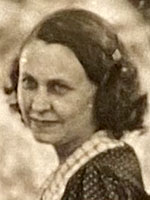
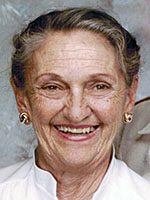
J. A. Felker published 5 puzzles under editor Will Weng who was "astonished" to learn that she was female. See more at PSPP.
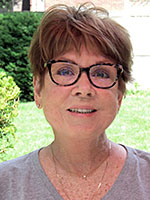
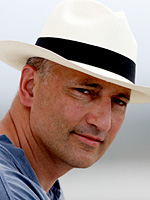
Pawel Fludzinski currently lives in Denver where he serves as CEO of a biotech startup. He started constructing crosswords in 2011 after meeting Will Shortz at a talk hosted by good friend and fellow constructor Mickey Maurer. His teenage daughter is the light of his life.
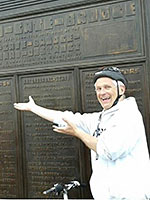
Bob Frank started solving crosswords as a commuter on New York's Long Island Railroad in the 1970s. Back then, when finished reading the news of the day, most rail commuters went on to solve the daily crossword puzzle. ... read more
He didn't start writing crosswords until some years later after he had left MetLife and had begun working for New York State Civil Service. The office where he worked had a newsletter, and he volunteered to try my hand at creating crosswords for it.
On October 24, 1996, his first NEWSDAY effort proved successful. He went on to have more published in other publications, including, with some help from Nancy Salomon, the New York Times. He quit authoring crosswords in 2004.
In 2023, he made a comeback. After quite a few adjustments to hisinitial submission — and with the help of Jeff Chen - he was successful again, after that nearly 20-year hiatus, and got one of his works published in a major nationally-distributed newspaper (although it was not the New York Times) on Monday, March 27th, 2023.
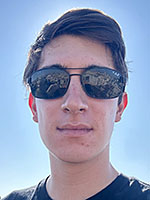
Michael Garbus, originally from Scottsdale, AZ, is a software developer currently based in Seattle, WA. Beyond his crosswords, he's known for his cactus collection, currently at 31 specimens and growing.
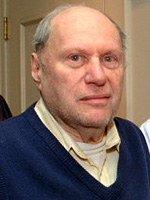
"Younger constructors may not know, but Charles was one of the greats in crossword history. His first puzzle appeared in the old New York Herald Tribune on Feb. 21, 1944, when he was just 13 years 6 months of age." See the complete Will Shortz reminiscence here.
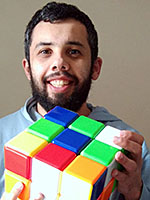
Guilherme Gilioli, from Bento Gonçalves, Rio Grande do Sul, is a full-time cruciverbalist; the first NYT constructor known to be from Brazil. He started solving English crosswords in 2016 to improve his English vocabulary. ... read more
He also constructs crosswords in Portuguese for Brazilian magazines, and for his website.
Flip Koski points out that "Sergei Tilart" is an anagram of "Israel Gitter." We believe this is one of Israel's pseudonyms.

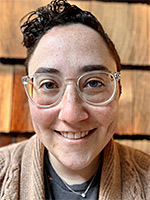
Rebecca Goldstein, of Albany, Calif., is a research scientist at Merck, developing cancer immunotherapies.
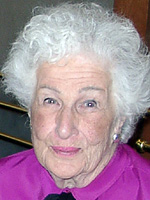
Bernice Gordon's NYT crossword construction career didn't start until she was nearly 40, but that didn't stop her from getting 147 published over her 62-year career. She was prolific even in her 90s, and her last two were constructed when she was 100 years old.

Peter Gordon is a puzzlemaker and editor from Great Neck, N.Y. He has been a puzzle editor for Games magazine, Sterling Publishing, and the bygone New York Sun. Since 2010 he has edited Fireball Crosswords, a 45-times-a-year online-only super-challenger.
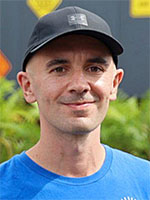
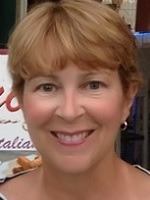
Tracy Gray, of Hunt Valley, Md., owned and operated a lawn and landscaping business with her husband.
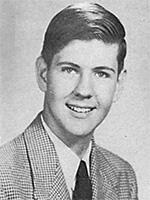
John Greenman, a longtime college textbook editor, had 64 puzzles in the Times, including 12 in the Shortz Era. He was also published by the Tribune syndicate and People magazine. ... read more
Eugene Maleska, in his 1984 book "Across and Down," identified John as one of the most promising newcomers to constructing.
Born in 1936, he grew up in Deposit, New York. His mother was a librarian and his father was a veterinarian. He attended Hamilton College, graduating in 1957 with a degree in English literature.
As the Hamilton alumni magazine explained about his career path:
From Hamilton and at the recommendation of a mentor in the English Department, John moved to New York City to work for the publishing company then known as Harper & Brothers. (As a result of mergers, it became Harper & Row in 1962 and HarperCollins in 1990.) His first assignment was as a publisher's representative, specifically a "College Traveler." He visited colleges and universities in his geographic territory, the Upper Midwest, to meet with faculty members and, ideally, sell them on new textbooks in their respective fields….
By [1963], John had been promoted to editor for economics and business administration in the company's college division. As his career unfolded, he rose to senior editor by 1989 and later to executive editor, the position he held when he retired in 1997. John wasn't very interested in the management of a publishing company; he preferred the nuts-and-bolts of editing and thus cultivated a comparatively small group of authors with whom he worked for a number of years.
In 1963, John married Barbara Storms, a children's book editor. They had two children, a daughter and a son.
In retirement, in addition to constructing crosswords, John had many pursuits. These included volunteering at the information desk of the Weill Cornell-NY Presbyterian Hospital, sketching, needlepoint, and attending the theater, sometimes four times a week, according to the Hamilton alumni magazine.
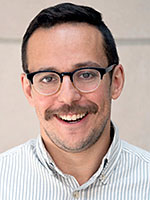
Daniel Grinberg, of Philadelphia, is a user experience researcher for a consulting company.
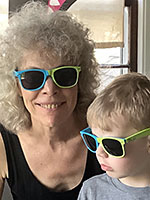
Mary Lou worked for many years in hospital transfusion services and blood centers, processing and reference labs, and a paternity lab. She graduated from the University of Dayton and has a Specialist in Blood Banking (SBB) certification. Her hobbies include photography, reading, bicycling, hiking, swimming, and traveling.
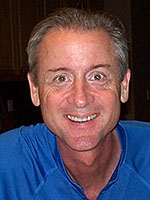
Bruce Haight is originally from Wisconsin and is now a semi-retired eye surgeon in San Diego. He was inspired to start puzzle construction by Peter A. Collins. ... read more
Bruce once rallied against Will Shortz for ten minutes in ping-pong and didn't get a single point off him.
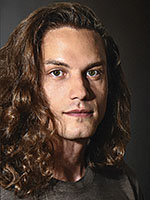
Stephen Hiltner is an editor, writer, and photographer. He works on the Travel desk at The New York Times, where he edits and contributes to the weekly World Through a Lens column. A graduate of the University of Oxford and the University of Virginia, he joined The Times in 2016 after editing for six years at The Paris Review.
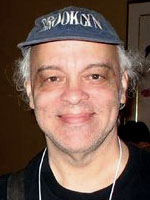
From Wikipedia: Henry Hook (September 18, 1955 — October 27, 2015) was widely credited with popularizing the cryptic crossword in North America. With Henry Rathvon and Emily Cox, he wrote the crossword for the Boston Globe. ... read more
Hook began constructing crosswords at age 14 when he sent a rebuttal crossword to Eugene T. Maleska. Maleska's crossword contained the hidden message: You Have Just Finished The World's Most Remarkable Crossword
Hook's crossword contained the hidden message: What Makes You Think Your Puzzle Is More Remarkable Than Mine?
Maleska subsequently became Hook's mentor.
In 2007, Seattle musician Jim Horne created XWord Info, a website that celebrates New York Times crosswords and the people who make them. A year later, he started the Wordplay column for the Times and reviewed puzzles there for three years.
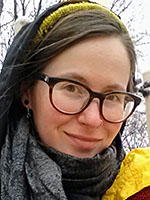
Christina Iverson, of Ames, Iowa, is a digital puzzle editor for The Times. She reviews crossword submissions and helps edit the accepted ones for publication. She also runs the Monthly Bonus crossword and writes a weekly column called Easy Mode.
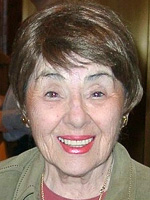
Maura Jacobson was the first winner of the prestigious Merl Reqgle Award for lifetime achievement in crossword constructing in 2016, ... read more
See Remembering Maura Jacobson by Will Shortz, and David's Steinberg's In Memoriam.
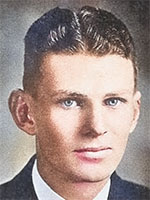
Reginald L. Johnson was one of the oldest Times constructors of all time. Fittingly, his last crossword, which appeared in 1993 when he was 92, had the theme of people named "Young." ... read more
He had 36 known crosswords in the Times, the earliest in 1974.
Mr. Johnson's accomplishments in his 90s were not limited to crosswords. At 91, his Sherlock Holmes-inspired book They Came to Baker Street was published. (One of his early crosswords also had a Sherlock Holmes theme.)
Reginald Lee Johnson was born in 1900 in Elizabeth, New Jersey. His father was a dry goods merchant and his mother was a homemaker.
He attended Princeton, where he was on the varsity track team and ran the half-mile, according to his obituary. He graduated Phi Beta Kappa in 1922.
In 1924, he married Dorothy Maloney. They settled in Riverdale, New York, where they raised two children. They were married for 69 years until Dorothy passed away in 1993.
Professionally, Mr. Johnson was a longtime executive at Johns-Manville, where he was a vice president and director of advertising.
He was also a skilled bridge player. Alan Truscott, a legendary bridge columnist at the Times, mentioned Mr. Johnson in multiple columns. Mr. Truscott was also the editor of Mr. Johnson's Sherlock Holmes book.
Mr. Johnson passed away in 1997 at age 96.
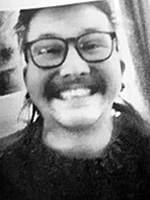
Taylor Johnson, of Minneapolis, is a stay-at-home dad who volunteers at a food co-op.
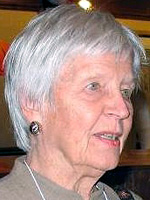
Nancy worked as a journalist at The Long Islander and authored educational textbooks for Educational Developmental Laboratories.
Will Shortz has called Nancy, "one of the greats — one of the few constructors to successfully go from the Maleska era to my own."
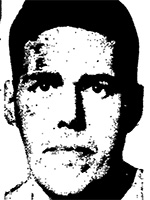
NOTE: This bio covers both Willard Jordan and Archie Kreiling. ... read more
A 1959 profile of Margaret Farrar in The New Yorker noted that "a good many puzzles…come from inmates of penitentiaries, who presumably have plenty of time on their hands." While it is unknown just how many Times constructors in that era were inmates, two were Willard N. Jordan and Archie S. Kreiling. From prison between 1942 and 1954, Jordan had 39 known puzzles in the Times, including the first pangram. Kreiling had at least 10 puzzles in the Times. Not only were they both prisoners, they were inmates at the same prison at the same time. Both were prisoners at the Ohio State Penitentiary in Columbus, Ohio in the 1940s. Each also was eventually transferred to the London Prison Farm, a facility for prisoners on good behavior, located near London, Ohio (though it is unknown how long, if at all, they overlapped at London). While it seems a virtual certainty that they knew each other, there is no known evidence of their relationship.
Jordan and Kreiling had similar paths to prison. Each was convicted of first-degree murder in the 1930s for killings committed in the course of much lesser offenses. In 1931, Jordan shot and killed a police officer who was attempting to arrest him for stealing five automobile tires; Kreiling killed a night watchman in 1937 during a burglary of a dry cleaning company. In both cases, the juries recommended "mercy," which meant Jordan and Kreiling each avoided the death penalty and instead received life sentences. Jordan died in prison in 1955, while Kreiling was eventually paroled in 1960.
On the topic of prisoner-constructors, Will Shortz noted in 2017 that, notwithstanding that old joke about inmates having time on their hands, he has rarely received submissions from prisoners. The first one he accepted was from Lonnie Burton in 2017. Eugene Maleska, in his 1984 book Across and Down, said that he received puzzle submissions from inmates, but did not indicate whether he accepted any.
Willard Newton Jordan was born in Columbia Station, Ohio in 1901. His father, Robert Jordan, was a grocer and his mother, Estella (Reisinger) Jordan, was a home maker. In 1932, he was convicted of first-degree murder for the killing of Columbus patrolman Leslie Green. Green and other officers were attempting to arrest Jordan for stealing five tires when Jordan fired multiple shots, killing Green. He was sentenced to life in prison. He died in prison in 1955 at the age of 54.
Archibald Sylvester Kreiling was born in Cleveland, Ohio in 1909, the son of Olin Kreiling, a streetcar conductor, and Agnes (Ruche) Kreiling, a homemaker. In 1937, he was convicted of first-degree murder for killing Joseph Kristy, a night watchman, during a burglary at a dry cleaning plant. In 1960, after 23 years in prison, the governor of Ohio reduced his conviction from first-degree murder to second-degree, making him eligible for parole. He was paroled later that year. He died in 1974 at the age of 65.
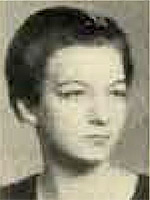
Betty Jorgensen authored at least 77 crosswords in the Times. She often employed punny quips in her themes, such as "The smith making hardware for a new bathroom reports he's forging a head." ... read more
Born in 1916 in Portland, Oregon, Barbara "Betty" Price was the daughter of Ore Price, a lawyer, and Margaret (Beharrell) Price, a homemaker. In 1935, she married Victor Jorgensen, a photographer, and journalist, also from Portland. (His photos include the New York Times version of the iconic sailor and nurse kissing in Times Square at the end of World War II.) After the war, Betty and Victor traveled abroad for ten years as a photographer-researcher team. Their work was published in Fortune, Life, Collier's, the Saturday Evening Post, and other outlets. In the mid-1950s, they settled in Maryland, where they had two daughters. In 1968, the family moved back to Oregon, where Betty and Victor founded Telltale Compass, a boating publication.
Betty's first known crossword in the Times appeared in 1988. Over the next ten years, she was a frequent contributor. Her last Times puzzle (with the quip "A door's what a dog is perpetually on the wrong side of") was published a few months before she passed away in 1998.
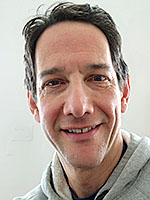
Rich Katz, of San Francisco, does freelance work in corporate restructuring, with a focus on financially challenged companies.
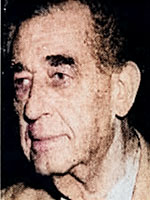
Lester Keene was one of the most prolific constructors of the early years of the Times crossword. Through 1947, Keene had 35 crosswords in the Times, the most of any constructor at the time.* He died that same year. ... read more
Keene's 35 crosswords were all Sundays (daily puzzles did not begin until 1950). Even today — over 75 years after his last puzzle appeared — he ranks in the top 40 of the most prolific Sunday constructors of all time. He was also the most-published constructor in each of the years 1944 (9), 1945 (13), and 1946 (9).
Keene was born in 1874 in Memphis, Tennessee. By the late 1890s, he had settled in New York. He managed a Manhattan chemical company — Keene Chemical — for many years that he ran with his cousin.
In 1916, he married Meta Fuller, who had previously been married to the author Upton Sinclair. Lester and Meta had one child, Lester, Jr.
The family lived in New York in the 1920s. They later moved to Florida, where Keene worked for a credit-rating agency. He retired in the mid-1930s, settling in St. Petersburg, Florida.
Keene was an avid chess player. He began playing at age 10. He was active in the Manhattan Chess Club and later served as president of the St. Petersburg Chess Club. In 1917, he faced the world-class master David Jankowski in a game that was chronicled in many outlets. (Keene, with an end-game advantage of three pawns to one knight, declined Jankowski's offer of a draw, only to lose five moves later).
Besides the Times, Keene was published in the New York Herald Tribune, with his first-ever crossword appearing there in the mid-1930s. He was also published in the film fan magazine Photoplay.
Keene died in 1947. Meta passed away in 1964. Lester Jr., who went on to have a career as an electrical engineer, died in 2009.
*Keene's count of 35 crosswords is based on puzzles published under the names Lester Keene (20), L. K. Peters (14) and L. K. Webster (1). "L.K. Peters" is presumed to be a pseudonym for Keene that Margaret Farrar employed ("L.K." being Keene's initials and "Peters" a reference to St. Petersburg, where he lived in his constructing years). "L.K Webster" is an apparent reference to Keene's initials and the dictionary.
As Will Shortz has explained, Farrar sometimes used pseudonyms for a constructor who had two puzzles published close in time. One puzzle would often appear under the constructor's actual name, and the other would have a pseudonym. In creating the aliases, Farrar often incorporated the constructor's city or street (or both) into the name. She also appears to have created pseudonyms using crossword-related terms like "Cross" and "Webster."
Another interesting fact about Keene: his wife had formerly been married to Upton Sinclair for 10 years. The Sinclair's divorce was quite the story in the society pages in 1911.
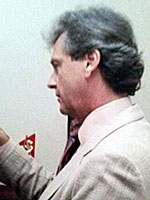
Ted Kern is a Fire Protection and Electrical Engineer retired from the Port Authority of NY and NJ, where among other assignments in his 40-year career, he was involved with the building of the original World Trade Center in the early '70's for five years. He still does the Times Crossword every day, including Sundays, and he says he is very impressed with the present-day puzzle constructors. He hopes to motivate himself to construct another New York Times Crossword.
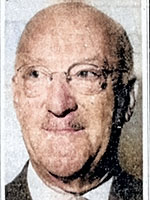
Isaac "Ike" Kert was born in Montreal in the early 1890s. He attended McGill University, obtaining an undergraduate degree in 1912 and law degree in 1915. His legal practice focused on transactional work. In 1919, he married Sara Gittleson. They had one daughter, Doris. In addition to constructing crosswords, he was an avid basketball player — playing regularly into his 60s — and an active fisherman. ... read more
He passed away in 1963 at age 73. In addition to the Times, his puzzles appeared in the New York Herald Tribune and other publications, according to his obituary.
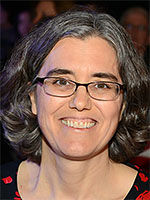
Laura Taylor Kinnel is a math teacher and the director of studies at a Friends boarding school in Newtown, Pa.
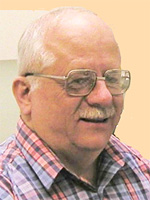
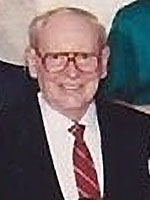
Albert J. Klaus was born in Jersey City, New Jersey in 1917, the son of Charles and Anne (Fischer) Klaus. In 1949, he married Anne Horan, also of New Jersey. They raised three children. A graduate of NYU, Albert was a mechanical engineer. He worked for over 25 years at Airco, an industrial gas and metals company in Union, New Jersey. He retired in 1979. His first Times crossword was published in 1983, the start of a prolific 13-year period in which he was published at least 119 times in the Times. He was also published elsewhere. He passed away in 2000 at the age of 82. (Bio courtesy Flip Koski.)
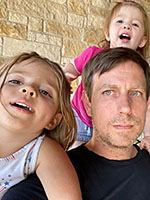
Brandon Koppy, of Dripping Springs, Texas, is a performance director for an ad agency.
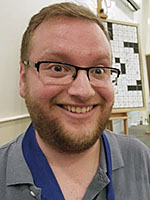
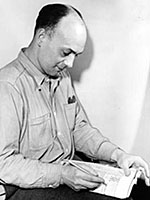
NOTE: This bio covers both Archie Kreiling and Willard Jordan. ... read more
A 1959 profile of Margaret Farrar in The New Yorker noted that "a good many puzzles…come from inmates of penitentiaries, who presumably have plenty of time on their hands." While it is unknown just how many Times constructors in that era were inmates, two were Willard N. Jordan and Archie S. Kreiling. From prison between 1942 and 1954, Jordan had 39 known puzzles in the Times, including the first pangram. Kreiling had at least 10 puzzles in the Times. Not only were they both prisoners, they were inmates at the same prison at the same time. Both were prisoners at the Ohio State Penitentiary in Columbus, Ohio in the 1940s. Each also was eventually transferred to the London Prison Farm, a facility for prisoners on good behavior, located near London, Ohio (though it is unknown how long, if at all, they overlapped at London). While it seems a virtual certainty that they knew each other, there is no known evidence of their relationship.
Jordan and Kreiling had similar paths to prison. Each was convicted of first-degree murder in the 1930s for killings committed in the course of much lesser offenses. In 1931, Jordan shot and killed a police officer who was attempting to arrest him for stealing five automobile tires; Kreiling killed a night watchman in 1937 during a burglary of a dry cleaning company. In both cases, the juries recommended "mercy," which meant Jordan and Kreiling each avoided the death penalty and instead received life sentences. Jordan died in prison in 1955, while Kreiling was eventually paroled in 1960.
On the topic of prisoner-constructors, Will Shortz noted in 2017 that, notwithstanding that old joke about inmates having time on their hands, he has rarely received submissions from prisoners. The first one he accepted was from Lonnie Burton in 2017. Eugene Maleska, in his 1984 book Across and Down, said that he received puzzle submissions from inmates, but did not indicate whether he accepted any.
Willard Newton Jordan was born in Columbia Station, Ohio in 1901. His father, Robert Jordan, was a grocer and his mother, Estella (Reisinger) Jordan, was a home maker. In 1932, he was convicted of first-degree murder for the killing of Columbus patrolman Leslie Green. Green and other officers were attempting to arrest Jordan for stealing five tires when Jordan fired multiple shots, killing Green. He was sentenced to life in prison. He died in prison in 1955 at the age of 54.
Archibald Sylvester Kreiling was born in Cleveland, Ohio in 1909, the son of Olin Kreiling, a streetcar conductor, and Agnes (Ruche) Kreiling, a homemaker. In 1937, he was convicted of first-degree murder for killing Joseph Kristy, a night watchman, during a burglary at a dry cleaning plant. In 1960, after 23 years in prison, the governor of Ohio reduced his conviction from first-degree murder to second-degree, making him eligible for parole. He was paroled later that year. He died in 1974 at the age of 65.

John Kugelman, of Gainesville, Va., is a software engineer specializing in cybersecurity.
Charles Kuhls was one of the first constructors published in the Times. His sole known Times crossword appeared on July 5, 1942. ... read more
Like many early Times constructors, he was one of Margaret Farrar's longtime contributors to the Simon & Schuster crossword books, appearing there as early as 1928. In one edition, the editorial team noted:
Mr. Kuhls is well known and favorably — or unfavorably — to you all. We never introduce one of his constructions without getting out the red lanterns and setting the storm signals.
From early on, Mr. Kuhls' puzzles were noted for their ingenuity. In a 1929 syndicated crossword entitled "No Threes," his entries were all at least four letters (in an era when two-letter words were common). For a 1927 puzzle, his editors observed that a "goodly percentage" of the entries started with the same letter. One of his crosswords in 1930 used left-right mirror symmetry, prompting the editors to note that the "pattern takes on a different form from the usual familiar design.
Among Times constructors, he ranks highly in many "all time" categories. Originally from Germany, he is among the first immigrants published in the Times, joining J.C. Doesburg (Holland), Louis Shields (Poland), Alexis Boodberg (Russia), and Thomas Meekin (England). He is also one of the first constructors whose native language was not English.
Born in 1873, he is among the earliest-born Times constructors, a group that includes Mr. Boodberg (1869), Mr. Doesburg (1869), Harriot Cook (1871), Mabel Daggett (1873), Lester Keene (1874), Agnes Bartlett (1875), Mr. Meekin (1878), Mr. Shields (1881), and Charles Erlenkotter (1881). Many of these constructors were also Simon & Schuster contributors.
This generation was already in their 30s and 40s when crosswords were invented in 1913 (Mr. Kuhls was 40). When the Times launched its crossword in 1942, they were in their 60s and 70s, with Mr. Kuhls being 68.
Charles Louis Kuhls was born in Germany in 1873. In the 1880s, his family immigrated to the United States. They settled in Queens, where Charles' parents operated the Bethlehem Orphan Asylum, an orphanage affiliated with several local Protestant congregations.
Around the turn of the century, Mr. Kuhls was a teacher at the orphanage. By 1905, he joined the post office as a mail carrier, a position he would hold for decades. (Other Times constructors who worked for the postal service in New York include Eli Wesoff and the legendary Jules Arensberg).
In about 1907, Mr. Kuhls married Louise Bahrs. They lived in Brooklyn and had one child, Grace.
Mr. Kuhls passed away in May, 1952 at age 78. Six months later, a syndicated crossword appeared with the byline of his wife, Louise (her only known puzzle).
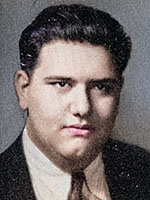
Joseph LaFauci, a lifelong resident of Boston's North End neighborhood, was a prolific constructor in the Times and elsewhere. He was published in the Times at least 70 times in the 1950s through the 70s. ... read more
"I used to work the crossword puzzle in the New York Times when I was a kid," he said in a 1980 interview. "I thought some of them were terrible puzzles. So I sent in my own, and the Times published it."
He earned a living as a constructor for over 30 years. Starting in the 1970s, he authored the daily 11x13 crossword for King Features Syndicate, which ran in nearly 400 newspapers.
"I just love words, and I was always interested in etymology," he said in a 1990 profile. "I did it almost as a hobby. Then I tried to do it permanently. Now it's a fairly well-paying position."
His King Features puzzles appeared under the pseudonym "Thomas Joseph," a combination of the first names of LaFauci and his editor, Thomas Sheehan. Today, King Features continues to use the Thomas Joseph name in its puzzle branding.
In the Times, LaFauci used a pseudonym at least once and maybe more. He published a 1970 Times puzzle under his mother's maiden name, Jennie Lemmo.
He also may have authored other Times puzzles using a pseudonym. For example, in the 1990 profile, he noted that he once used the entry THE MERCHANT OF VENICE in an oversized 23x23 grid in the Times. XWord Info's database reveals there is one puzzle fitting that description — from February 13, 1977 — but it is under the name Elmer Toro. (Five other Times puzzles are also attributed to Elmer Toro.) While there is no definitive proof that Elmer Toro was a LaFauci pseudonym, it is possible.
In constructing his King Features puzzles, LaFauci explained that he would start with 1-Across and 1-Down and go from there. He rarely consulted a dictionary. "It's what you have up in your squash," he said. "If you had to look everything up, you'd be out of your mind."
In the 1990 profile, he recounted a crossword prank he would play. In a public place like a subway, he'd leave behind a crossword from a newspaper for someone to find. He would partially fill the grid. But the words he'd write in, while real, had no relation to the puzzle's clues.
"When the person looks at it, the words don't make any sense at all. The words fill in perfectly, but they don't match the definitions," he explained. "I guess that's the Puck in me."
LaFauci was also a trivia enthusiast. He was a frequent winner on a local radio station's "stump the staff" contest. His prize each time was a canned ham. Using various names, he won so many hams that they stacked up in his apartment faster than he could give them away to neighbors. Eventually, the show caught on and banned him.
He also loved opera. On Sunday mornings, he'd sing opera out his North End window. The local church complained that his booming voice was distracting the parish organist.
Joseph J. LaFauci was born in Boston in 1924, the son of Antonio LaFauci, a fruit seller, and Nunciata "Jennie" (Lemmo) LaFauci, a homemaker. Both of his parents had emigrated from Italy. Joseph graduated from Boston College High School in 1942 and attended Boston University. He passed away in 1997 at the age of 73.
Sources for this bio include "Remembering Joe LaFauci," by Joseph Sarno, NorthEndWaterfront.com; interview of Joseph Sarno (January 2023); 1942 BC High yearbook photo, provided by Lance Hutchinson, school archivist; "1 Down: Man Who Makes Crosswords," by Daria Labinsky, Peoria Journal Star, March 15, 1990; "Direct Line," by Jim Zofkie, Dayton Journal Herald, June 19, 1982; various other genealogy sources and newspaper archives.
This research is courtesy of Flip Koski, who also made this discovery: It's safe to attribute the one 1970 Times puzzle by Jennie Lemmo to LaFauci himself. His mother was known as Jennie, and her maiden name was Lemmo. And, remarkably, a tribute written years ago by a neighborhood friend recalled that LaFauci used his mother's name as a crossword pseudonym.
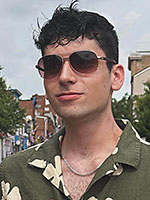
Spencer is the owner of the Crossword Workshop Discord and creates YouTube tutorials for beginner crossword constructors.
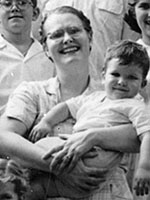
Elizabeth "Betty" Leary (née Gallagher) was born in Cincinnati, Ohio, in 1915 and was raised in New Rochelle, N.Y. She was the mother of fourteen children, an artist, writer, election poll worker, television game-show contestant, and crossword constructor. In 1957, she was a contestant on Name That Tune, hosted by George DeWitt. ... read more
Her tune-naming partners were Mario the Butcher from Long Island and a preacher's wife from California. This trio was on for about seven weeks, winning the top prize of $25,000, shared equally. Mrs. Leary was selected as a contestant because she could name tunes, but chiefly because her twelve children and her first granddaughter filled the entire first row of the Broadway theater where the show was filmed.
She also did a few TV commercials, one in which she extolled the virtues of an Almond Joy candy bar by singing "sometimes I feel like a nut. Sometimes I don't."
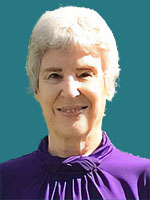
Lynn Lempel has been constructing crosswords, hundreds of them, since the 1970s. Her career hats have included writing, editing, community college teaching, and Head Start research. She is a longtime library volunteer and has worked on numerous political campaigns, usually for the loser. ... read more
A Northeasterner, she has lived in Daytona Beach for many years—and no, she has never been to an auto race.
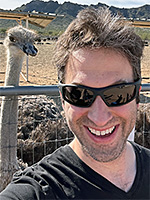
Zachary David Levy is an assistant professor of neurosurgery and emergency medicine at Hofstra's Zucker School of Medicine on Long Island.
Michael Lieberman, of Washington, D.C., is an attorney at Fairmark Partners, an antitrust firm that fights corporate mergers.
Alexander Liebeskind is a recent graduate of Columbia University, where he studied Computer Engineering, Applied Math, and Political Science. He is currently a software engineer at a startup and an ORISE Research Fellow at the FDA.
Wyna Liu is an associate puzzle editor for The Times, which she joined in 2020. She helps select and edit clues for the puzzles that appear in the paper. The thing she loves most about her job is "talking puzzles with other people who love them!" (That would be the rest of us on the games team.) ... read more
When Wyna isn't working, she makes jewelry and magnetic objects, teaches yoga and spoils her dog.
Aimee Lucido is the author of two books for kids, Emmy in the Key of Code and Recipe for Disaster. She is also the editor of the weekly trivia feature for the AVCX.
There's an interesting story about how John L. Mapes is likely a pseudonym for Jack Luzzatto.
Mark MacLachlan is a professor of chemistry and the Dean of Science at the University of British Columbia in Vancouver. For his research, he creates new iridescent materials that mimic the structures of beetle shells — and can be used for sensing and coloration.
Eugene T. Maleska was the New York Times Crossword Puzzle Editor from Feb 28, 1977 (when Will Weng retired) until his death in 1993. He was succeeded by Will Shortz. Records are uncertain during his time, but he probably authored more NYT crosswords than any other constructor.
Jules Markey is a retired U.S. Postal Service letter carrier living in Blue Bell, PA. Many of his crossword theme ideas came while trekking through the Fairmount neighborhood of Philadelphia, delivering the mail.
John Martz is a cartoonist, illustrator and book designer in Toronto, Ontario, who specializes in picture books and graphic novels for kids.
Michael S. ("Mickey") Maurer is an Indianapolis native whose career as an attorney and entrepreneur has included cable television, film production, radio broadcasting, publishing, real estate and banking. Mickey has authored seven books: Water Colors (2003), 19 Stars of Indiana — Exceptional Hoosier Women (2009), and 19 Stars of Indiana — Exceptional Hoosier Men (2010), 10 Essential Principles of Entrepreneurship You Never Learned in School (2012), 50 Crossword Puzzles with playful narrations (2015), Cinderella Ball (2017) and The Methuselah Gene (2021). Mickey is married to Janie Maurer, and they have three children and nine grandchildren.
Wilson McBeath had 28 known crosswords in the Times, all in the Maleska era. ... read more
Nev W. McBeath, who went by his middle name, Wilson, was born in 1915 in Whiting, Iowa. His father was an insurance agent, and his mother was a homemaker.
He graduated from Iowa State University in 1936 with a degree in economics. In 1937, he married Margaret Quaife. They were classmates at Iowa State, where Margaret's father was a long-time professor. (As a tribute to his native state, one of Wilson's Times puzzles has an Iowa theme.)
After briefly living in Chicago, Wilson and Margaret settled in Akron, Ohio, where they raised two children.
For years, Wilson worked as an accountant with the Firestone Tire & Rubber Company in Akron. He was also active with the All-American Soap Box Derby.
He passed away in 2004 at the age of 89.
Stephen McCarthy, originally from Vancouver Island, B.C., is a Ph.D. student studying transportation modeling in Stockholm, Sweden.
Ryan McCarty, of Washington, D.C., is a principal consulting manager at a firm specializing in data/analytics for federal clients. He is also a baritone in multiple vocal ensembles.
Thomas Meekin, an accomplished mason and writer, was one of the most prolific crossword constructors in Times history. He constructed over 200 known Times crosswords from the 1940s to 60s. His 1943 debut came two months shy of his 65th birthday. All of his remaining Times crosswords appeared when he was 65 or older, making him the all-time leader in that age category. He also ranks first in total Times crosswords by constructors born outside the U.S. ... read more
Born in 1878, Mr. Meekin is among the earliest-born Times constructors, a group that includes J.C. Doesburg (1869), Harriot Cook (1871), Mabel Daggett (1873), Louis Shields (1881) and Charles Erlenkotter (1881). This generation was already in their 30s and 40s when crosswords were invented in 1913 (Mr. Meekin was 34). They were in their 60s and 70s when the Times launched its crossword in 1942, though most had been published in other outlets long before their Times debuts. Mr. Meekin's crosswords were in the New York Herald Tribune as early as 1930.
Margaret Farrar appears to have created various pseudonyms for Mr. Meekin. As Will Shortz has explained, Ms. Farrar sometimes gave a frequently-published constructor a pseudonym to avoid having the same byline appear too often. One of her conventions for creating a pseudonym was to base it on the constructor's city or street name, information readily available from constructor submissions. For example, Jack Luzzatto, while living on Mapes Avenue in the Bronx, once appeared as "John L. Mapes." For Mr. Meekin, who lived on Jackson Avenue in Elizabeth, New Jersey, Ms. Farrar appears to have fashioned the pseudonyms "Elizabeth Jackson," "Thomas Jackson," and "Jackson Cross." Crosswords with these constructor names all appeared shortly after a standard Thomas Meekin byline, usually two puzzles later.
Thomas J. Meekin was born in 1878 in Wolverhampton, England, near Birmingham. His father, Charles, was a mason and his mother, Clara (Broom) Meekin, was a homemaker. In the early 1880s, the family emigrated to the U.S., settling in Brooklyn. There the family grew, with Thomas being the oldest of 12 children.
In 1902, Thomas married Caroline Wiley. They had two daughters, Muriel and Clara.
Like his father, Thomas was a mason. In the 1890s, he began work in the trade. He rose over time from a journeyman, to a foreman, and then a superintendent of masonry projects. One of his projects was the Goerke-Kirche department store in New Jersey in the early 1920s. The 400,000 brick building is still standing today.
He also served as the secretary of an 8,000-member union of New Jersey masons and plasterers. In that role, he drafted public statements for the union, including a scathing critique of local inspectors for lacking knowledge of the masonry work they inspected.
He had a lifelong interest in writing. In 1928, his adventure novel "The House on Little Finger" was published. The story was a twist on the legend of the lost treasure of Captain Kidd. "Slightly verbose…the author nevertheless writes in pleasing style," The Brooklyn Daily Times said in a review. Previously, in 1914, Mr. Meekin was among the winners of a nationally-syndicated contest in which readers were given the start of a story set in ancient Egypt and asked to describe how it should unfold. The judges singled out Mr. Meekin for writing his submission in verse, which they printed in full. For his efforts, he won $10 (over $300 today).
After retiring as a mason, Mr. Meekin became a member of the New Jersey Board of Education. He passed away in 1970 at the age of 91.

From The First Class of Our Diverse Crossword Constructor Fellowship - The New York Times (nytimes.com) ... read more
Trey writes:
I am a New Yorker with a mailing address in California who currently lives in Zagreb, Croatia.
I grew up competing in a variety of sports (football, basketball, baseball, track, lacrosse and mountain-bike racing), and I'm a fan of games of all sorts. I also love language and primarily make my living through language (nonfiction writing, content marketing, hosting podcasts, voice-over work and occasionally self-publishing fiction). So crossword puzzles help me scratch that itch to both play a game and play with words. Constructing crossword puzzles really lets me play with words because of the cluing. When I write anything, I'm trying to engage the mind and sync up with the reader. I love the thought of truly affecting someone I've never met with my writing: It's like an immortality device. The relationship between the constructor and the solver may be the purest expression of the idea of building a bond between writer and reader that ever existed. That's what drives me to construct.
Alfio Micci, born in 1918, played in the First Violin Section of the New York Philharmonic for many years.
See this article in the Pre-Shortzian Puzzle Project.
Sande Milton grew up in Manhattan, cutting his teeth on New York Post puzzles before graduating to the NYT. He received three degrees from Cornell University, in French Literature, Education, and Sociology. He is Professor Emeritus at Florida State University, having taught Educational Policy Analysis and Research Methods. He also consulted on many projects, including holding research seminars in Togo and Haiti for educational policy analysts in Francophone Africa.
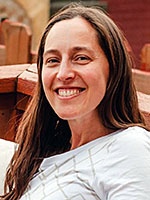
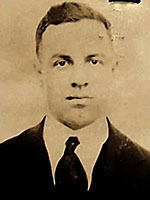
Anthony Morse constructed 34 known crosswords in the Times. His wife, Roberta, was also a constructor. She authored the first-ever rebus puzzle in the Times and Mr. Morse constructed the second. Combined, the Morses had 99 known crosswords in the Times between the mid-1950s and early 70s, making them one of the most prolific couples of all time. ... read more
The extent to which the Morses collaborated is unknown (they have no known shared bylines). However, their groundbreaking rebus puzzles — Roberta's published on Labor Day 1954 and Anthony's on New Year's Day 1955 — were remarkably similar in form. The grids had identical layouts, except Anthony's had two more black squares. The rebuses were placed in the same squares.
Anthony "Nat" Morse was born in 1891 in Springfield, Mass. His father was a prominent preacher known for founding the first Sunday school in Jerusalem and serving as an early leader of the YMCA. His mother was a homemaker. Anthony's great-uncle was Samuel F. B. Morse, inventor of the telegraph and co-developer of Morse code.
He graduated from Yale in 1915. As a senior, he led the varsity crew team as its stroke, the pace-setting rower. As his grandson, also named Anthony Morse, explained:
He was the JV stroke. The coaches didn't think he had the endurance to be varsity stroke because he had asthma. … At some point, the varsity stroke made the mistake of taking a sick day, which necessitated my grandfather sitting in as varsity stroke for the day's practice. My grandfather saw his opportunity, and he took it. Rather than setting the stroke at about 34 strokes per minute, he set the stroke at sprint level and kept it there until there were only two of the crew who hadn't collapsed. … From that day on, my grandfather was the varsity stroke.
In World War I, Anthony was a lieutenant in the Navy. He served aboard ships that escorted convoys in the Atlantic and Mediterranean, engaging in anti-submarine warfare. As he explained in a diary he kept during the war:
Until the Americans came, the British had been conducting more or less "run away" warfare, considering it victory if they got a convoy through without the loss of a ship. The U.S. ships, however, immediately began an aggressive warfare that has practically driven the submarines away from the British Isles, leaving the Mediterranean as the only practical field of operation.
His diary was reprinted in a 1990 issue of Naval History magazine. In it, he described how his ship destroyed a German submarine commanded by the infamous Captain "Spartel Jack," who had sunk over 100 Allied ships. "Nobody has seen or heard of Spartel Jack since," he wrote.
In 1920, Anthony and Roberta were married in Lexington, Kentucky, at the home of Roberta's aunt. "My grandfather did not want to be married in a church," Anthony's grandson explained. "[His father] was a hellfire and brimstone preacher, and as a result my grandfather avoided churches"
Anthony and Roberta settled in the suburbs of New York, where they had one child, Anthony Jr., who himself would go on to serve as a Naval officer in World War II.
The Morses later lived in Washington DC, Greenwich Village and Naples, Florida. In addition to crosswords, Anthony constructed diagramless puzzles. He passed away in 1973 at age 82.
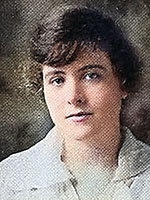
Roberta H. Morse constructed the first-ever rebus crossword in the Times. She had a total of 64 known Times crosswords from the mid-1950s to early 70s. Her husband, Anthony Morse, was also a constructor and had the second rebus crossword in the Times. Combined, the Morses had at least 99 known crosswords in the Times, making them one of the most prolific couples of all time. They likely had more than their known 99 puzzles, as their era of constructing includes thousands of Times puzzles with unknown authors. ... read more
Will Shortz described Ms. Morse's groundbreaking rebus puzzle in a 2020 Wordplay article:
The first rebus crossword in The Times — way back when Margaret Farrar was crosswords editor — was by Roberta Morse and appeared on Monday, Sept. 6, 1954. Four squares in the grid needed digits in order to work: 1-STEP crossed 1-DOWN (appropriately at 1-Down), 2-WAY crossed 2-FACED, 3-LANE crossed 3-DAY and 4-MAN crossed 4-BIT. As a bonus, running down the center of the grid was FIVE-STAR ADMIRAL, although, in this case, the number was spelled out....
The early rebus puzzles all used standard symbols — usually ones on a typewriter — like dollar signs ($), ampersands (&), digits and the like….From what I've heard, they were controversial, because they "broke the rules,"and some solvers considered them unfair.
David Steinberg featured the puzzle in a Pre-Shortzian Puzzle Project blog post in 2015:
This crossword's theme is centered around a nifty little number rebus. I especially like that the 1, 2, 3, and 4 squares appear in order in the grid, even though they're not placed symmetrically. I also appreciate that 1-Down is literally 1 DOWN—and, by extension, that the 1 is in square one. I find it slightly off-putting that the FIVE in FIVE STAR ADMIRAL is spelled out, but I appreciate the effort to make the central 15-letter entry thematic. I personally would have preferred a reveal entry in that position, but given that this is likely the first published rebus crossword, I'm more awestruck by the innovation than annoyed by the minor inconsistency! By bringing the word count up to 80, the constructor was able to keep the fill smooth and incorporate a handful of lively entries into the nonthematic fill. My favorites are BARRACUDA, OVERTHROW, TEETOTALER, THUNDERS, BARNYARD, and ENDEARMENT—that's a lot of zip for a themed puzzle, let alone a rebus!
Ms. Morse's rebus puzzle was published on Labor Day in 1954. Four months later, on New Year's Day 1955, the second-ever rebus puzzle appeared in the Times, this time by Mr. Morse. Mr. Morse's puzzle featured four rebuses, one each for the suits in a deck of cards. The Morses' two puzzles were remarkably similar. The grid layouts were identical, except Mr. Morse's had two more black squares. Each puzzle's rebuses were placed in the same squares in the grid.
Two more rebus puzzles appeared in 1955 (also on holidays, July 4th and Labor Day) but it is unknown if the Morses constructed them, as the authors of those puzzles remain a mystery. The next rebus puzzle in the Times would not appear until 10 years later, in 1965, by Bernice Gordon.
Roberta "Bobby" Holloway was born in 1895 in Lexington, Kentucky. Her father was a horse trainer and her mother was a homemaker.
She graduated from Vassar College in 1917. According to her grandson, Anthony:
She never saw the inside of a school until her first day at Vassar. Her mother died young, and her father had a passion for hunting and fishing. Rather than leave his daughter behind on his expeditions, he brought her along and had her tutored. The tutors must have been good. She spoke several foreign languages — my recollection is German, Italian, French, Spanish, and Latin.
In 1920, she married Mr. Morse. They had one child, Anthony Junior. They lived in the suburbs of New York for several years. During World War II, Roberta worked as a translator for the Office of Strategic Services, living in Washington DC.
In the 1950s, when the Morses began constructing for the Times, the couple lived in Greenwich Village.
"In their New York City apartment on Washington Square, she would work on authoring puzzles between the innings of Dodgers games," her grandson explained.
The Morses later moved to Naples, Florida. In 1973, Mr. Morse passed away. In 1984, Ms. Morse died at the age of 89.
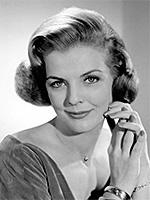
Mountweazel, Lillian Virginia, American photographer, b. Bangs, Ohio. Turning from fountain design to photography in 1963, Mountweazel produced her celebrated portraits of the South Sierra Miwok in 1964. She was awarded government grants to make a series of photo-essays of unusual subject matter, including New York City buses, the cemeteries of Paris and rural mailboxes. The last group was exhibited extensively abroad and published under Flags Up! (1972). Mountweazel died at 31 in an explosion while on assignment for Combustibles magazine. ... read more
— The New Columbia Encyclopedia (1975)
Jack Mowat is a Civil Engineering major at the University of Notre Dame, planning to pursue a master's degree in that same field. ... read more
Jack is originally from the greatest city in the midwest: Omaha, Nebraska. His senior year, Jack was the project manager for the concrete canoe team, a club that designs and builds a 20-ft canoe out of concrete, and, yes, it does float!
Will Nediger, of London, Ontario, is a professional crossword constructor and writer of trivia questions. He's a regular contributor to National Academic Quiz Tournaments, which supplies questions for quiz-bowl tournaments at the middle-school, high-school, and college levels.
Derrick Niederman, of Charleston, S.C., is a writer, mathematician, and game designer, and formerly an adjunct math professor at the College of Charleston.
Rich Norris is the former Los Angeles Times crossword editor. He created high-quality crosswords for almost 30 years. His specialty is clean, accessible grids with precise, often twisty clues. His puzzles have appeared in many different venues, including the New York Times, Newsday, Wall Street Journal, and Crosswords Club, which he also used to edit.
Margaret grew up in Poland and started solving crosswords to improve her English after moving to the United States at age 16.
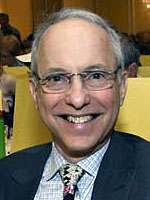
Stu Ockman is president of Ockman & Borden Associates, management consultants to the construction industry. In addition to The New York Times, his crosswords have appeared in the Los Angeles Times, the Jerusalem Post and… well, if you do a google search for "Stu xwords," you'll usually find him hanging out near the bottom of the first page. And why not check out his new, 275+ page tome, Will and Me: Confessions of a Crossword Junkie, at www.ockman.us. It's an authorized biography of a slice of Will Shortz' career at The Times that both entertains and enlightens.
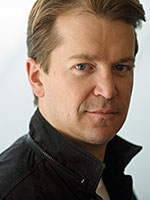
Daniel Okulitch, originally from Calgary, Alberta, is a professional opera singer of more than 25 years. He has performed for the New York City Opera, Los Angeles Opera, Teatro Colón in Buenos Aires, and many other venues. He completed a run of shows at the Bolshoi Theater in Moscow as the title character in Mozart's "Don Giovanni."
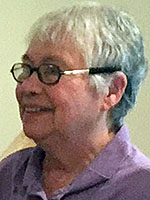
Mary Virginia Orna was a professor of chemistry at The College of New Rochelle in New York. PSPP has more.
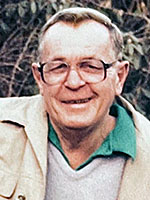
Stafford "Tap" Osborn was an executive at Reed & Barton silversmiths in Taunton, Mass. Born in France in 1924, he was the son of Kenneth Osborn, president of a latex manufacturer, and Helen (Brown) Osborn, a homemaker. ... read more
Tap graduated from Amherst College in 1945. Soon thereafter, he joined Reed & Barton, where he worked for 40 years, retiring in 1985 as vice president of merchandising.
He had a daughter and four sons. He was a resident of Falmouth, Mass., and later Fort Myers, Florida. He had at least 112 crosswords published in the Times, as well as others in the LA Times, Washington Post and elsewhere. He was also the editor of crossword books published by the Running Press. He passed away in 1994 at the age of 70.
Gustie Owens, of New York City, is a research assistant at MDRC, a nonprofit education, and social policy research organization.
Paolo Pasco is a data scientist from San Diego who did a kickflip once. No one saw it happen, but he swears he did.
Gregory E. Paul, one of the most prolific constructors of the Shortz Era, authored 116 crosswords in the Times from 1994 to 2005. His 86 Monday crosswords are the most of any constructor in the Shortz Era. He was also published in other outlets, sometimes under the pen name Roscoe Beet, one of his dogs. ... read more
Born in 1954, he grew up in Scottdale, Pennsylvania. He attended Goshen College in the 1970s. (His third Times puzzle includes the entry GOSHEN [Indiana college]). He later graduated from Eastern Mennonite University.
After his constructing years, he attended Southwest College of Naturopathic Medicine in Arizona, graduating in 2009. He then moved to North Carolina's Outer Banks, where he practiced homeopathic medicine.
He passed away in 2017. His obituary noted, "He is remembered by all as someone with a great laugh, his big dog Bagel, walking the beach, and a passion for cooking and health."
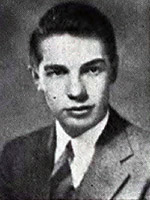
Patterson Pepple grew up in Lima Ohio and attended UT Austin. He made his first crossword in 1984 when he was 64 years old and kept making them until he was 74. The photo is from his high school year book.
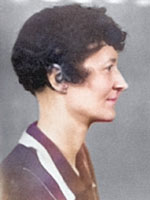
Helen Pettigrew was born in Charleston. She worked as a teacher and a sketch writer for magazines, and published several Bible-themed crosswords in the 1960s and 1970s. See more here.
Sheldon Polonsky is a pediatrician and medical software analyst at Cincinnati Children's Hospital.
Beloved constructor Merl Reagle constructed the Sunday crossword for the San Francisco Chronicle (widely syndicated) every Sunday for 30 years. He starred in the 2006 documentary, Wordplay, which followed the American Crossword Puzzle Tournament that year. The tournament now annually presents the MEmoRiaL Award, a lifetime achievement award in the form of a snow globe with Mr. Reagle inside. ... read more
The photo here is from his appearance on The Simpsons.
Warren W. Reich served in the U.S. Army from 1943 to 1946 and returned to eventually get a Ph.D. in German Literature from the University of Connecticut. His first NYT crosswords appeared when he was nearly 60.
As an academic whose advanced studies have been published by Routledge, Cambridge University Press, and others, one might guess that Paul G. Remley would view his youthful output of six daily puzzles for the Times as little more than rite-of-passage juvenilia, along with his early articles for Word Ways and Logophile (articles often addressing palindromes, word squares, and similar concerns). ... read more
Indeed, Remley's first two Friday puzzles in the Times came out when he was 19 years old, inaugurating a five-puzzle run that ended abruptly a few months after he had reached the age of 21. In a statement prepared for XWord Info, however, Remley grants that readers who have worked through his more complex academic studies of Old English and Medieval Latin texts "might detect some sort of connection."
Remley cites three major influences on the constructing style that is seen in all of his crosswords: book-length collections by Jack Luzzatto, where that prolific Times stalwart perfected his deployment of "fifteen-letter phraseology and block-corner formalism," collections that Remley "solved from cover to cover"; the innovative and sometimes offbeat content that enhanced early "structuralist monuments by the incomparable Hume R. Craft"; and, above all, the continuing "integration of virtuoso and oblique elements" that would be pushed even farther by future Times crossword editor Will Weng.
Having solved the Times Sunday puzzles continually throughout the later 1960s, both as a preteen and as a teenager, Remley remembers clearly his "palpable sense of joy" when it was announced (in 1969) that Will Weng himself would succeed the iconic Margaret Farrar as editor of the Times puzzle section. Nearly five years passed, however, before Remley would produce work that he felt he could submit to Weng for possible publication.
It is tempting to speculate that Remley's early run broke off (in 1976) as a result of some sort of sour-grapes scenario, when his fifth Weng-edited puzzle came out on a Thursday, and not on a Friday (as had all the rest). As it happened, it was actually at this point that Remley had begun to study Old English, Old Icelandic, and Old Irish in earnest on the Ann Arbor campus of the University of Michigan, along with Greek and Latin. Remley recalls that he was excited to find certain traditionally scholarly areas towards which he could direct some of his more convoluted thought processes, exercises in concentration that been occupied, largely perforce (before Remley's discovery of early-period textual scholarship), by palindromes, anagrams, and crossword puzzles.
In the 1980s, Remley completed Master's-level work in the Department of Anglo-Saxon, Norse, and Celtic, at the University of Cambridge (UK), also minoring in Political Philosophy at Cambridge, and subsequently earning a PhD in New York City, in the Department of English and Comparative Literature at Columbia University.
In the course of these studies, a sixth and final puzzle by Remley appeared in the Times, in 1983, once again on a Friday, and there under the editorship of another luminous figure, Eugene T. Maleska.
Since 1988, Paul G. Remley has been a professor in the Department of English at the University of Washington in Seattle, offering more than 35 years of service to the institution. He remains active as a Fellow of the Society of Antiquaries (London) and as a Fellow of the International Society for the Study of Medieval Latin (Florence). His marriage to Fiona Robertson Remley now spans four decades of mutual adoration.
With the proliferation of archival digitizations online, Remley concedes his chagrin at the quantity of 1970s linked, popular-culture references that come up with a free search of his name, which include sound-recording efforts for rock bands in the Detroit area (in close orbit with members of the now-canonical Stooges and MC5), as well as guest-stints as a DJ on college-radio shows in Ann Arbor. "In any case," Remley concludes in his statement for XWord Info, "I guess the energy had to come from somewhere."
Christy Ridley served in the Army during the Korean War as an interpreter because of his linguistic skills. He graduated from Vanderbilt Law School and then studied at Columbia in New York to become a law librarian. He started constructing crosswords after his retirement.
Herbert Lyle Risteen was from Wisconsin, where he was a Latin and history teacher before working for that state's tax department. Besides crosswords, he wrote several historical fiction books for boys.
Sidney L. Robbins was born in Manhattan in 1909, the son of Herman and Mary (Susnitsky) Rabinowitz. He grew up in Brooklyn and attended Columbia College, graduating in 1930. In 1946, he married Beatrice Levine. Sidney was an executive in a leather manufacturing business. ... read more
He had over 200 crosswords published in the Times, including over 140 Mondays. Of his 50 Times puzzles in the Shortz Era, 48 were Mondays. He passed away in 1997 at the age of 86.
Danny J. Rooney is a musical theater writer in New York City. His credits as a composer/lyricist include "The Game Boy," "A Smalltowne Christmas" and "GLUE: A Pony Tale."
Robert Vaux Roop is an artist, specializing in collage. Originally from Quarryville, Pennsylvania, he founded the Lancaster Summer Arts Festival in the 1960s. Previously, he painted in watercolors and oils. He has lectured on art and exhibited his works in the Lancaster region.
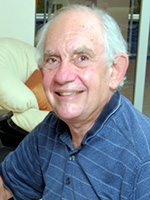
Will Shortz called Mel Rosen "one of the longtime greats in crossword puzzles" in this NYT memorial. ... read more
David Steinberg shared his memories on his blog.
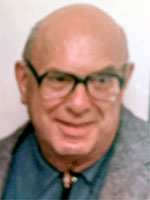
Bert Rosenfield had at least 60 crosswords in the Times, including 57 in the Maleska era. Maleska, in his 1984 book Across and Down, placed Rosenfield in the A-list of constructors of the day. Years later, David Steinberg, in his Pre-Shortz Puzzle Project blog, described Rosenfield as "a masterful pre-Shortzian constructor who published many puzzles with novel, interesting themes." ... read more
Berthold E. Rosenfield was born in Buffalo, New York in 1911. His father was a tailor and his mother was home maker.
He attended Rensselaer Polytechnic Institute in Troy, New York in the 1930s. During World War II, he served as an officer in the Army.
After the war, he returned to Troy and worked for many years in sales at a distributor of cigars, tobacco products, and candy. He retired in 1980. He was also an avid handball player and tournament organizer.
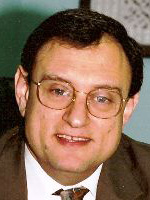
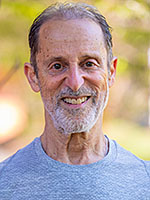
Lewis Rothlein lives in Asheville, North Carolina, where he teaches yoga. His work life has taken a winding course, from being a journalist, to a syndicated newspaper columnist, to teaching elementary school, to owning a yoga studio. He began solving crosswords after seeing the movie WordPlay, and several years later, he began making puzzles, where his favorite part is coming up with clues that make him go "Yes!"
Robert Ryan, of London, is an economist for the U.K.'s Competition and Markets Authority. He grew up in Ireland, where he used to sit on his father's knee and "help" him solve the cryptic crossword in the back of a television guide.
Guido published many puzzles in The New York Times under Margaret Farrar, Will Weng, and Eugene T. Maleska, but almost all of them appeared without bylines. He was a painter and singer, had a long career as an art director for boutique advertising agencies in New York, producing campaigns for clients including Citibank, Pan Am, Nabisco. PSPP has more.

Michael Schlossberg is a doctor at St. Charles Medical Center, in Bend, Ore., specializing in internal medicine.
Dan Schoenholz, of Walnut Creek, Calif., is the community development director for the city of Fremont.

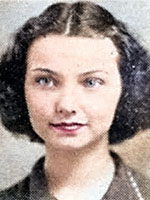
From a 1968 newspaper article:
She is Mrs. Lewe Sessions of 1017 Cynthia Crescent [in Anniston AL], a quiet unassuming housewife and mother of four. Her patchwork creations appear three or four times a year ... under the name Diana Sessions.
Mike Shenk is the crossword editor of The Wall Street Journal. See this 2014 article about him from the Penn State News.
Louis Shields was among Margaret Farrar's go-to roster of constructors in 1942, the inaugural year of the Times crossword. His crosswords appeared four times that year, second only to the legendary Charles Erlenkotter and tied with Alvin Ashby, a star constructor of the era, and Jack Luzzatto, one of the most prolific constructors ever. ... read more
Mr. Shields, a native of Poland, was also notable as one of the first non-U.S. born constructors published in the Times. He is likely second in that category, behind the Dutch-born J.C. Doesburg, who was published a month ahead of Mr. Shields in the spring of 1942.
Mr. Shields, whose last name was originally Scheidlauer, was born in 1881 in the Russian-controlled part of Poland. His father, Meyer, was a cigar maker. His mother, Katherine, was a homemaker. The family emigrated to the U.S. in 1884, arriving in New York and settling on the Lower East Side and later moving to East Harlem.
By 1900, Louis's father had passed away. To help support the family, Louis, the oldest of five, worked as a 19-year old bookkeeper. In the decades that followed, he continued working as a bookkeeper at various furniture and clothing companies.
Mr. Shields is among the earliest-born Times constructors, a generation that also includes Mr. Doesburg (1869), Harriot Cook (1871), Mabel Daggett (1873), Thomas Meekin (1878) and Mr. Erlenkotter (1881, within three months of Mr. Shields). They were already in their 30s and 40s when crosswords were invented in 1913 (Mr. Shields was 34). When the Times finally launched its crossword, they were in their 60s and 70s.
Mr. Shields' crosswords appeared in other outlets as early as the mid-1930s. In the Times, he had nine known crosswords, all in the 1940s. He also constructed several diagramless puzzles appearing in the Times and elsewhere.
While the documentary record is not definitive, he appears to have passed away in the mid-to-late 1940s.
Dick Shlakman served his country for over 37 years in the Air Force as both an enlisted Service Member and then as a Civilian for the Department of Defense where he retired as the Director of the Air Force Engineering and Technical Services Worldwide (AFETS). ... read more
He received the Outstanding Civilian Career Services Award for 37 years of dedicated Federal Service. He had a BS of Business Management from the University of South Carolina and an MBA from Golden Gate University.
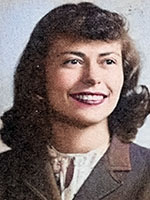
Lois Sidway was born Lois Hobart in 1929. She grew up in Oklahoma and there graduated from Phillips University, majoring in French. She married Peter Sidway in 1952. They lived in Connecticut for many years, before moving to Virginia. Peter passed away in 2011.
Alan Siegel lives in Rancho Palos Verdes California and is a soccer referee. In the off season, he volunteers at the local senior center with the AARP Tax-Aide program preparing tax returns. He has been a long time crossword solver and was inspired by a lecture given at the local library by David Steinberg. A high school student at the time, David explained the history of crosswords and the terminology used, what a rebus was, and also served Oreos — the favorite cookie of Cruciverbalists owing to their colors. Alan tucked away the idea of creating puzzles until time permitted — which came during the Covid-19 pandemic. His debut entry in The New York Times, was actually his first submission to The Times. He is indebted to the mentors and guides met on the Facebook groups Cruciverb and Crossword Puzzle Collaboration Directory.

Adam (he/him) is a Canadian living in San Francisco's historic Castro neighborhood. He graduated from Cal with a degree in Theatre, and now works as a children's video game designer. Adam enjoys playing weird board games, watching campy horror movies, and cuddling with his black cat. His 15 minutes of fame was when he won the grand prize on Wheel of Fortune, which ultimately led him down the path to puzzle construction.
Sarah Sinclair is a Product Manager at Microsoft living in Seattle, WA. She loves puzzles and crafts of all kinds and has published a variety of NYT-themed knitting patterns on Ravelry!

Sid Sivakumar is an MD/PhD student at Washington University in St. Louis, training in biomedical engineering and neuroscience.
Blake Slonecker is a history professor at Heritage University and constructs puzzles from his home in Prosser, Washington.
Evelyn E. Smith (1922–2000) was a remarkably versatile writer whose career bridged the worlds of mid-century science fiction, classical crossword construction, and later, cozy mystery novels. ... read more
Smith began publishing science fiction in the early 1950s, quickly becoming a regular contributor to premier speculative fiction magazines like Galaxy Science Fiction, The Magazine of Fantasy & Science Fiction, and Fantastic Universe.
Tone and Style: At a time when much of hard science fiction was deadpan and focused heavily on technology, Smith stood out for her sharp, satirical wit. Her stories frequently skewered social conventions, gender roles, and domestic life by placing them in absurd alien or futuristic settings.
Notable Works: Some of her best-remembered short stories include "The Golem" (1954), "The Vilbar Party" (1955), and "Helpfully Yours" (1955). Her satirical SF novel, The Perfect Planet, was published in 1962.
To supplement her creative writing income, Smith turned to constructing crossword puzzles. Her work caught the eye of Margaret Farrar, the legendary first crossword editor for The New York Times.
Between 1951 and 1958, the NYT published at least 8 of her puzzles. If you look closely at her grids—such as her one on Wednesday, February 12, 1958—you can actually see her topical instincts and literary background at play. She frequently integrated high-connectivity layouts and clues touching on contemporary science culture, such as multiple references to the International Geophysical Year (I.G.Y.).
After stepping away from science fiction and crosswords for a period, Smith reinvented herself later in life as a mystery writer. She is best known for her Miss Melville cozy mystery series, which began with Miss Melville Regrets in 1986.
The series follows Susan Melville, a refined, middle-aged New York socialite who falls into a surprising second career as a professional assassin for a high-society syndicate. The books were widely praised for reviving the same drawing-room wit and dry humor that characterized her early science fiction.
Under the pseudonym of Delphine C. Lyons, she authored a number of gothic romance novels and the non-fiction works Everyday Witchcraft and Love Potions & Spells, which collect folklore and magical spells, and Fortune Telling, eight ways to read the future.
Smith's short story "At Last I've Found You" was adapted into an opera by Seymour Barab; it premiered in Charlotte, North Carolina in 1984.
Ruth Weng Smith constructed at least three puzzles in the Times. She was the sister of Times crossword editor Will Weng. ... read more
Ruth Adele Weng was born in Michigan in 1902, the daughter of Frederick Weng, a Latin professor, and Amelia (Cramer) Weng, a homemaker. She was the oldest of three children, with Will being the youngest.
She grew up in Terre Haute, Indiana, where her father taught at Indiana State University. She attended Indiana State, graduating in 1924 with degrees in English and Latin. In 1930, she married Wesley D. Smith. Both Ruth and Wesley taught in Indiana public schools, where Ruth was also a basketball coach. They had one child, Terry, a son.
Ruth passed away in 1999 at age 96.
Addison Snell, of Mountain View, Calif., is the C.E.O. of Intersect360 Research, a consulting firm in high-performance computing.
Jay Spry was a longtime journalist with the Baltimore Sun who mentored generations of reporters. Spry's mentees included Russell Baker, the Pulitzer Prize-winning columnist, and David Simon, creator of the HBO series "The Wire." Simon included Spry as a character in the final season of "The Wire," which centered on a fictionalized version of the Sun newsroom. ... read more
Spry passed away in 1989. David Ettlin, another of Spry's proteges, wrote Spry's obituary for the Sun:
Jay Spry was a longtime journalist with the Baltimore Sun who mentored generations of reporters. Spry's mentees included Russell Baker, the Pulitzer Prize-winning columnist, and David Simon, creator of the HBO series "The Wire." Simon included Spry as a character in the final season of "The Wire," which centered on a fictionalized version of the Sun newsroom.
Spry passed away in 1989. David Ettlin, another of Spry's proteges, wrote Spry's obituary for the Sun:
Jay Spry, a cigar-puffing newspaper rewrite man who rarely allowed a deadline to get in the way of a good story — whether he was writing it or telling it —died of cancer yesterday…. He was 72.
He instilled the basics of good reporting — chiefly, double-checking every fact — in younger colleagues during two stints with The Sun that were sandwiched around a 16-year career as a press relations officer for what is now Exxon.
Finding the right word was no problem for Mr. Spry, since he was a noted constructor of crossword puzzles.
He was also a skilled tournament bridge player — an avocation only slightly removed from his legendary prowess at the poker table.
Among reporters pumped for facts and lectured on accuracy by Mr. Spry was Russell Baker, who joined his mentor on this newspaper's rewrite desk before moving along to the New York Times to become a Pulitzer Prize-winning columnist.
In [Baker's autobiography], Mr. Baker remembers Mr. Spry as a "one man school of journalism" who preached "the vacuum-cleaner philosophy of reporting then practiced by the New York Times, though not with the demanding exactitude Jay brought to it."
Recalling the challenge faced by young reporters in the field who had to phone in their facts to the rewrite desk, Mr. Baker wrote:
"On rewrite, Jay was the man for eight-alarm fires, and you had better come to the phone with the correct identification of every fire company on the scene; the name of every fire chief, including middle initial; the identity, address, and job of the person who turned in the first alarm, what he was doing when he first noticed the fire, [and] how many people he was doing it with.…"
Born in Lakesville, [Maryland]…, Jay Franklin Spry was the son Nellie Majors Spry and the late Rev. Charles W. Spry, a methodist minister whose frequent moves were responsible for the boy attending five grammar schools.
Mr. Spry attended Washington College, becoming editor-in-chief of the campus newspaper, the Washington Elm, and picking up extra cash at rummy and poker.
"His idea of heaven," said a college roommate, retired Maryland Court of Appeals Judge Marvin H. Smith, "was where you could sleep all day and play cards all night."
But somehow, Mr. Spry managed to graduate magna cum laude in 1937 and move along that July to a $20-a-week reporting job at The Sun, working the police beat and general assignments by streetcar.
He was "moved inside" little more than a year later to fill in on the rewrite desk, a job one step below an editing position.
Mr. Spry later attributed the move largely to the need for another player in the nightly newsroom poker game. He seldom lost. In fact, he recently recalled, "I often won more than I earned."
Newspaper work was only partially interrupted by World War II, in which Staff Sergeant Spry served as editor of the Fort Meade Post — a time, he noted, when Fort Meade was "the second largest city in Maryland."
He later joined a special team that translated Japanese air force codes.
Mr. Spry returned to The Sun after the war but was lured away in 1952 to greener pastures of what was then Esso Standard Oil Co….Mr. Spry took early retirement from Exxon in 1968, and for a year mostly played bridge and constructed crossword puzzles, an interest brought on by the ability of his wife, Carolyn Crane Spry, to solve them.
Both created puzzles that were printed and reprinted in dozens of the popular collections edited by Margaret Farrar, and Mr. Spry's more challenging works appeared regularly, with a byline in publications including the New York Times and the National Observer.
After his wife's death in 1973, he moved back to Maryland. And in the summer of 1976, Mr. Spry's former partner on The Sun's rewrite desk . . . lured him back to the newsroom for six more years with a lament on the need for a good-old-days type of rewrite man.
When contacted for this xwordinfo bio over 30 years after Spry's death, Ettlin shared the backstory of the obituary:
What the obituary doesn't reveal is how it came to be written. Jay himself, bedridden in his last days from colon cancer at an Annapolis area nursing home, called [the] then-news editor…, asking him to send me to see him and write his obituary.
I sat with Jay for about two hours taking detailed notes, including about his relationship with the younger journalist Russell Baker (who he had mentored, and considered as much a son as friend and colleague). I returned to the office and wrote an obit that basically ran two full columns in length, and the next day returned to read it to Jay.
His reaction: The Sun would never run such a long obit. And he hated the lede. I told him he didn't get to write' the lede of his own obit, and that everyone in the newsroom loved it. The lede stayed, although the obit was trimmed….
Ettlin also relayed a crossword anecdote about Spry involving a costume party: "Jay showed up as a ‘solve-me crossword puzzle,' with the squares laid out on a sheet he wore. There were some clues, because of the strategic location of the squares, he would allow only women to answer (with a magic marker)."
Nancy Stark, of New York City, is a writer, lyricist, and former editor for the Literary Guild book club.

David Steinberg is the puzzles and games editor for the Andrews McMeel Universal media company. The Universal Crossword, which he edits, appears in many newspapers, including The Boston Globe, The Philadelphia Inquirer, and the Miami Herald. ... read more
His first New York Times puzzle was published when he was 14 years old.
Autobiography from Jane Stewart and David Balton: ... read more
We started making acrostics long ago, by hand. On our first wedding anniversary, many moons ago, we each surprised the other with the gift of a homemade acrostic. A puzzle partnership foreshadowed!
About 15 years ago, Dave began a tradition of constructing acrostics for our family’s amusement on Christmas Eve, tailored to the interests and aptitudes of family members. Dave and Jane have created acrostics for friends and family more generally. Dave also submitted a crossword or two to the NYT over the years — including one constructed partly while on a work trip to the South Pole — but without success.
Needless to say, we were devoted fans of Emily Cox and Henry Rathvon ("HEX") throughout their storied run with the NYT. When we learned that the HEX era at the NYT was ending, we composed three acrostics and sent them to Will Shortz, having no idea what to expect. He ultimately decided to publish one of them on June 18, 2023, the puzzle based on the hilarious quote from Bill Bryson about parking in Rome. Will encouraged us to send him more … and before long, to our great joy, we found ourselves the NYT’s regular acrostic constructors.
The day our first acrostic ran in the NYT turned out to be special in several ways. On the Sunday morning in question, we bought a hard copy of the NYT and showed our names in print to visiting friends, to their considerable amazement. We also told them a story from more than 40 years earlier. In the early 1980s, the dad of one of Dave’s college friends had published a crossword in the NYT. That dad told Dave of the morning when he rode a commuter train into New York City and watched with glee as seemingly everyone in the train car was solving his puzzle. Dave thought then, "Some day "...
On the June day when our first NYT puzzle appeared, we went to a Washington Nationals baseball game with a large gathering, where our friends passed out copies of the puzzle that they had procured for all to do between innings. Dave’s "commuter train" moment had arrived! Similarly, Jane has been tickled to see some of her symphony colleagues huddled around acrostics backstage at the Kennedy Center.
Our approach to constructing acrostics starts with finding pithy quotes that meet all the format requirements — no mean feat. We try to vary the quotes by topic and author profile, sometimes with a view to a particular upcoming holiday or anniversary. We offer the possible quotes to Will first to get his blessing. Next, Dave creates an initial word list (answers), which is rather like playing a large and highly structured game of Bananagrams. We like to incorporate many answers and clues that link to the theme(s) of the quote.
Next, Jane generates clues for each answer, oddly finding her best inspiration while in the shower or behind the wheel, neither situation ideal for jotting down ideas. Sometimes, the clue-writing phase leads us to revisit our initial word list. After some back-and-forth, we send a beta version of the puzzle to our daughter, Becca; she solves the puzzle and offers valuable feedback. When we have incorporated Becca’s suggestions, we ship the acrostic off to the puzzlemeisters of the NYT, who edit some clues and run the puzzle by their own beta testers.
We are delighted to be undertaking this joint venture. Although we both love solving puzzles and playing word games (especially Upwords), we have careers that immerse us in very different pursuits. Jane is a first violinist with the National Symphony Orchestra and does some copyediting. Dave, who spent most of his career as a lawyer and diplomat for the U.S. State Department, worked in the White House until January 2025. He now has affiliations with the Harvard Kennedy School and the Ocean Conservancy.
Matthew Stock teaches eighth-grade math in Gainesville, FL. He started constructing crosswords in 2019.
Peter Swift had at least 79 crosswords in the Times, all in the Maleska era. Maleska, in his 1984 book Across and Down, placed Swift on his list of most promising newcomers. ... read more
Parton Swift was born in Buffalo, New York, in 1913. He sometimes used the first name Peter, including in his crosswords. His father was a judge, and his mother was a homemaker. He attended Harvard College in the 1930s and enlisted in the Army in 1940. In World War II, he served mainly in North Africa and France.
In 1953, he married Patricia Benoit, a Broadway and television actress best known for her role as Nancy Remington on the 1950s sitcom Mr. Peepers. They had two children.
Swift was an editor, writer, and layout artist for 25 years at the magazine Family Circle, only taking up crossword construction after he retired in 1978. He also invented a board game called El Tablero de Jesus, which is played on a grid.
He passed away in 1991 at the age of 78.
Alma Talley, a film critic and writer, constructed the sixth-ever crossword in the Times, which appeared on March 22, 1942. ... read more
Ms. Talley may have known Margaret Farrar personally. In 1928, the two were listed among a group of writers and editors attending a lavish party for artists. Ms. Farrar may have also known Ms. Talley's husband, a longtime journalist at the Times who pioneered photo spreads in the 1920s and 30s and later became the Sunday picture editor.
Alma Ruth Mabrey was born in St. Louis, Missouri in 1897. Her father was a U.S. Customs employee and once served as Speaker in the Missouri House of Representatives. Her mother was a homemaker.
Alma began writing at an early age, as she explained in a profile:
Sent out stories when I was eleven. Of course they came back, usually with a footnote written on the rejection slip, "We do not consider manuscripts unless typewritten." For years I felt all that stood between me and fame was the lack of a typewriter.
She graduated from Lindenwod College in Missouri in 1917. "I received a scholarship and it was near enough to go home to parties on weekends," she said.
In 1920, she married Victor Talley, a journalist from Missouri who was working in New York. They lived in Manhattan, where Alma's career as as a film critic and writer took off. She wrote for publications including the Morning Telegraph, Movie Weekly, and Motion Picture Magazine. Picture Play Magazine, another outlet she wrote for, featured her in a promo:
She's reviewed pictures, interviewed almost every star with anything at all to say, written feature articles, poems, and short stories, and altogether has had things published in twenty magazines.
In the 1960s, she constructed crosswords for magazines and syndicates, according to her Times obituary. She passed away in 1970 at the age of 72.
Mel Taub was a huge part of NYT puzzle history. He took over as interm crossword editor after Maleska's death until 1993, until Will Shortz was hired three months later. NYT has a nice obituary.
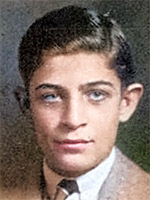
Ernst Theimer held a doctorate in chemistry from New York University and was the editor of the 1982 book, "Fragrance Chemistry: The Science of the Sense of Smell."
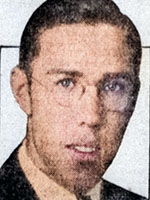
Judson G. Trent was born in Essex, Connecticut in 1914. His father was a Baptist minister. His mother was a home maker. ... read more
He graduated from Muskingum College in Ohio and later earned a graduate degree from the Oberlin School of Theology. He was a Baptist minister for several years in the 1930s and 1940s in Ohio, Connecticut, and New Hampshire.
By the 1950s, he had left the ministry and undertaken a new profession as a newspaper proofreader and printer. He worked at several newspapers around the country, including the Times, Boston Globe, Minneapolis Star and Tribune, and Washington Post. He spent most of his printing career at the Post — over 20 years — before retiring in 1982.
In the 1950s, he appeared on the quiz show "$64,000 Question," winning $16,000. He later appeared on the companion show "$64,000 Challenge" for five weeks.
He passed away in 1989 at age 75.
Ross Trudeau is a writer and puzzlemaker in Cambridge, Mass. His crosswords appear regularly in The New York Times, Los Angeles Times, The Wall Street Journal, and other venues, including his own website, Rossword Puzzles, where he posts an original (and free) puzzle every week. ... read more
In 2018 Ross collaborated on a Times crossword with another imaginative person — his father, Garry Trudeau, the creator of "Doonesbury."
Patti Varol is the editor of the Los Angeles Times Crossword. ... read more
She is also executive editor at PuzzleNation, managing and editing puzzle content for Crosswords Club, Daily POP crosswords, and the PuzzleNation mobile apps. Her crosswords have appeared in the Los Angeles Times, the Washington Post, the New York Times, and the Chronicle of Higher Education, as well as the Crosswords L.A., Lollapuzzoola, and Boswords crossword tournaments. She is also a founding editor of Women of Letters, a crossword pack featuring the work of women constructors, with proceeds benefiting women-centric charities.
Hoang-Kim Vu (he/him) works in business development and global public health in Washington, D.C.
Adam Wagner, originally of Long Island, New York, is a creative lead at Patreon where he helps creators get paid for their work. He's also a creator *on* Patreon, building a community around his daily puzzle games Order Up and Anigrams. In previous lives, Adam has also been a writer for Jimmy Kimmel Live!, a viral YouTuber, a game show champion, and an applied math major at Brown University. ... read more
Adam currently lives in Oakland, CA, with his wife, two kids, and a few thousand honeybees.
Robyn Weintraub, of Rye Brook, New York, has been constructing crosswords for more than a decade. She's a member of the in-house puzzle team at The New Yorker. When she's not making puzzles she's volunteering for the League of Women Voters trying to save democracy, or playing in her garden.
From Wikipedia: Will Weng (February 25, 1907 — May 2, 1993) was an American journalist and crossword puzzle constructor who served as crossword puzzle editor for New York Times from 1969–1977. ... read more
Born in Terre Haute, Indiana, he attended Indiana State Teachers College. Weng came to New York City in 1927. He got a master's degree from the Columbia University School of Journalism and joined the Times in 1930 as a reporter. He served as a Lieutenant commander in the United States Navy during World War II.
Weng had succeeded Margaret Farrar as crossword puzzle editor, and was himself succeeded by Eugene T. Maleska. After leaving the New York Times, he became the editor for a start-up crossword puzzle venue called The Crosswords Club, preparing five Sunday-size crosswords every month for distribution to subscribers.
Brad Wiegmann is a national security lawyer for the Department of Justice in Washington.
Joy L. Wouk was born Joy Lattman in New York City in 1919. She graduated from Barnard in 1940 and, shortly after, married Victor Wouk. Victor was an accomplished engineer (and the younger brother of author Herman Wouk). Joy had two sons. According to one remembrance, Joy took up crossword constructing when NYC went to alternate-side parking, which caused her to have to spend a lot of time in her car. She went through so many NYT crosswords that she started to create her own. ... read more
The photo here is from her Barnard yearbook.